Counting exact years can be tricky, and is frequently debated, but it’s generally thought that American modern art started on this continent not long after 1900. And yet, decades before Maurice Prendergast, Marsden Hartley and Arthur Dove pushed art into striking new territories, there were other artists who were already pioneering design, color and composition into realms that didn’t even have names yet. These artists weren’t painters, but Navajo weavers.
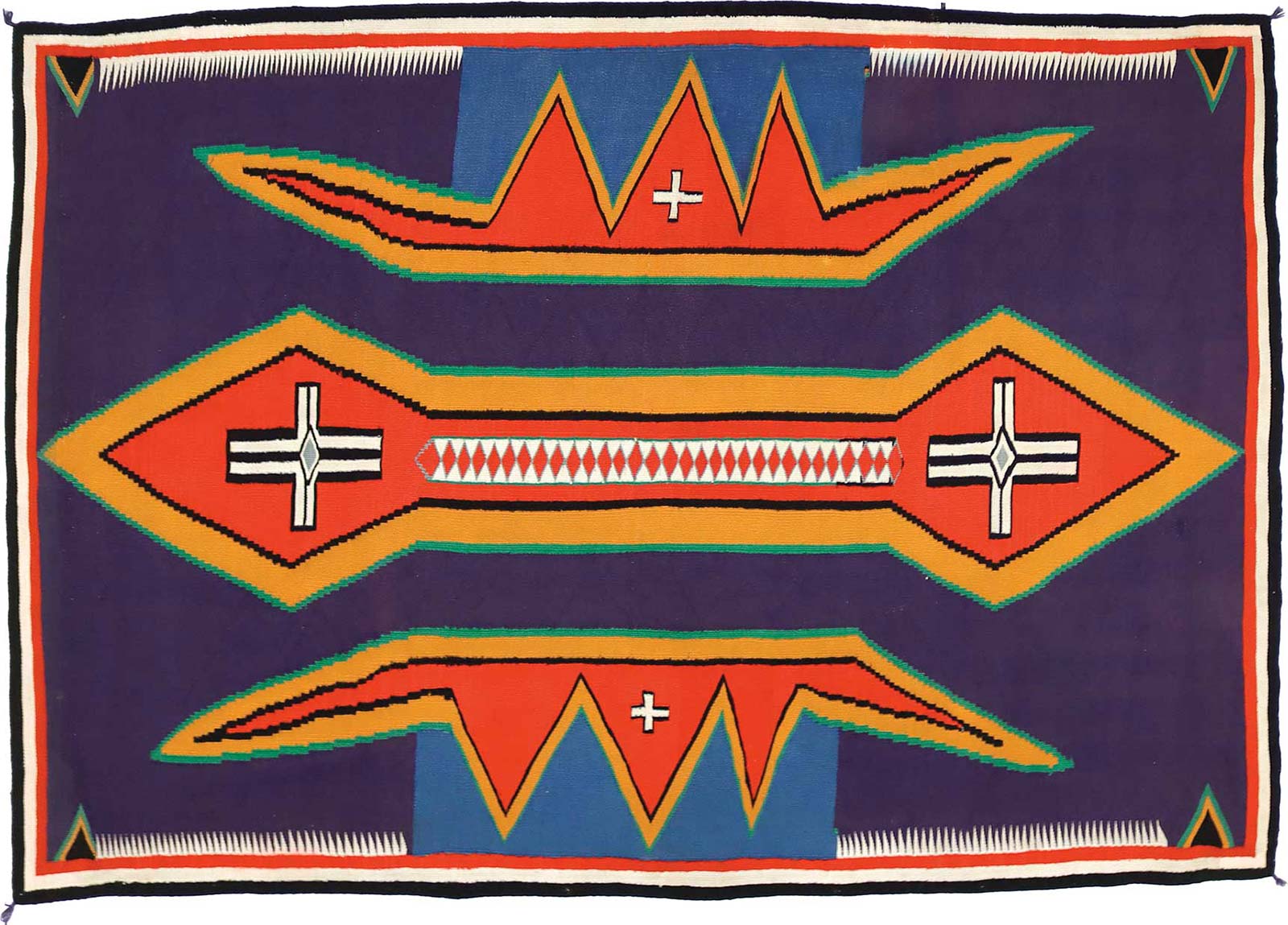
Navajo Germantown textile, 1870-1895, 49½ x 69 in.
These weavers were active decades earlier and more than 2,000 miles away from the East Coast, and yet their contributions to modern art have been underappreciated. Art dealer and weaving expert Kim Martindale hopes to expose these weavers to new generations. “Navajo weavings and textiles should be considered some of the most important artworks within American art,” Martindale says. “These weavers, primarily women, were creating these incredible weavings—bold patterns, contrasting and vibrant colors, flawless designs and skill—and they were doing it outside of the art world, and the world at large. And decades before others would do anything even remotely similar in paintings. I believe these Navajo artists deserve the credit for being the first modern artists in America.”
Navajo, or Diné, weavers were quite active in the 19th century, but everything changed in 1864 when the U.S. government forced more than 9,000 Navajo people, along with several hundred Apache, to march from their homelands into eastern New Mexico to be imprisoned in Bosque Redondo near Fort Sumner. After four years of miserable treatment and poor conditions, the Indigenous prisoners were released. Once they returned home, trading posts popped up around the Northern Arizona reservation, and with them new access to goods, including yarn from mills in Germantown, Pennsylvania. Prior to the trading posts, weavers raised sheep and used their wool and natural dyes for weavings.
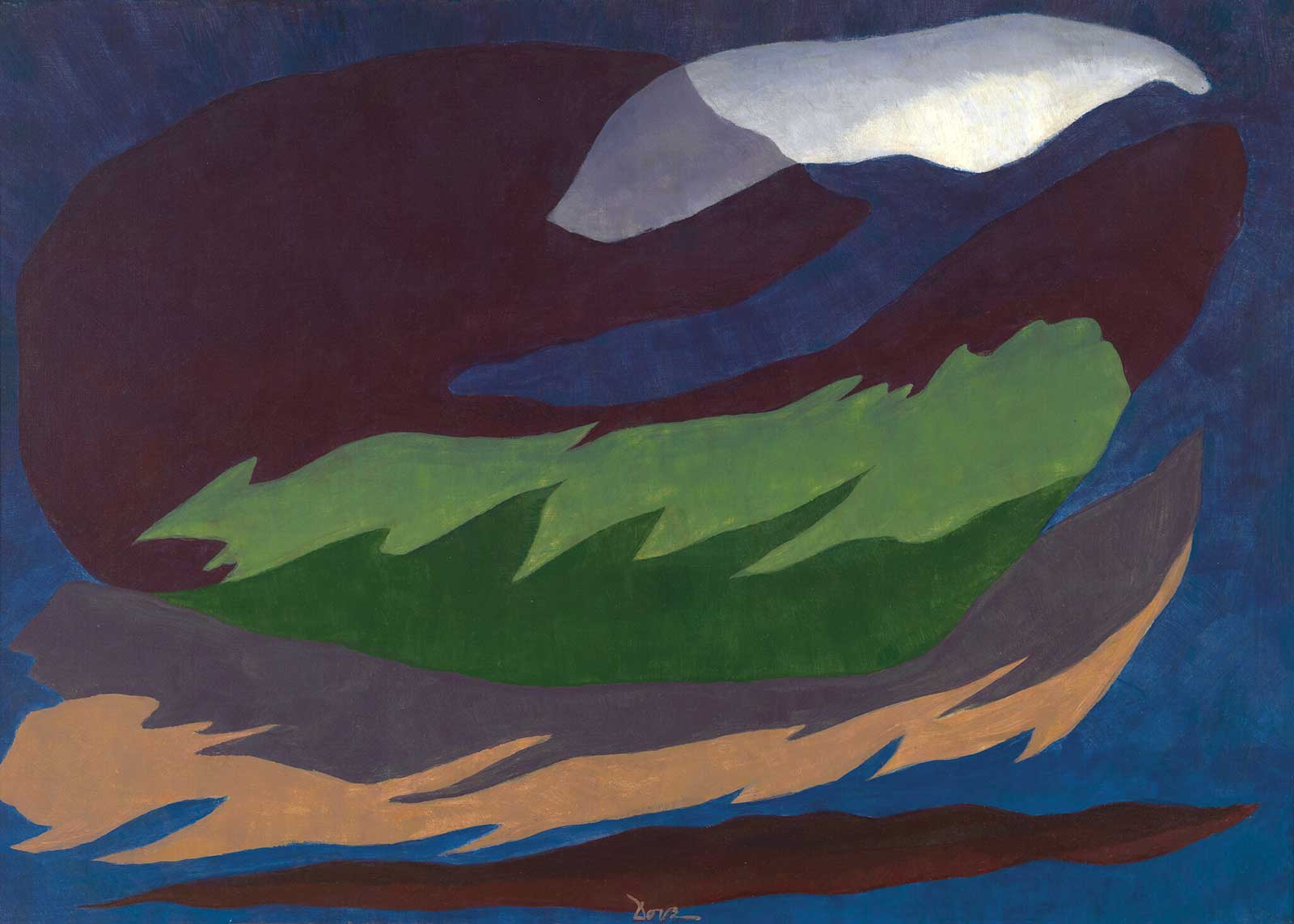
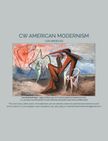
Arthur Dove (1880-1946), Land and Seascape, 1942, oil on linen, 247⁄8 x 35 in. Whitney Museum of American Art, gift of Mr. and Mrs. N. E. Waldman, 68.79.
Germantown four-ply yarn, which came in an abundance of new colors, created a watershed moment for many of the weavers, who began producing stunning weavings that were visually complex and decades ahead of the painters on the opposite end of the country. “It was a true moment,” Martindale says. “These women had an artistic expression that is truly unique in art. They had all this technical ability to make any weaving they wanted, but suddenly these colors and yarns allowed them to go even further, deep into their artistic mind’s talent. This explosion was all released at once. Some of these weavings created the style known as eye dazzlers, with fine detail and vibrating color. Others put colors together that would have never been done before. Greens with dark purples, or blues outlined with bright yellows. They were framed in these blocks of color and design. They had modernist concepts, even though they didn’t yet know what modernism was.”
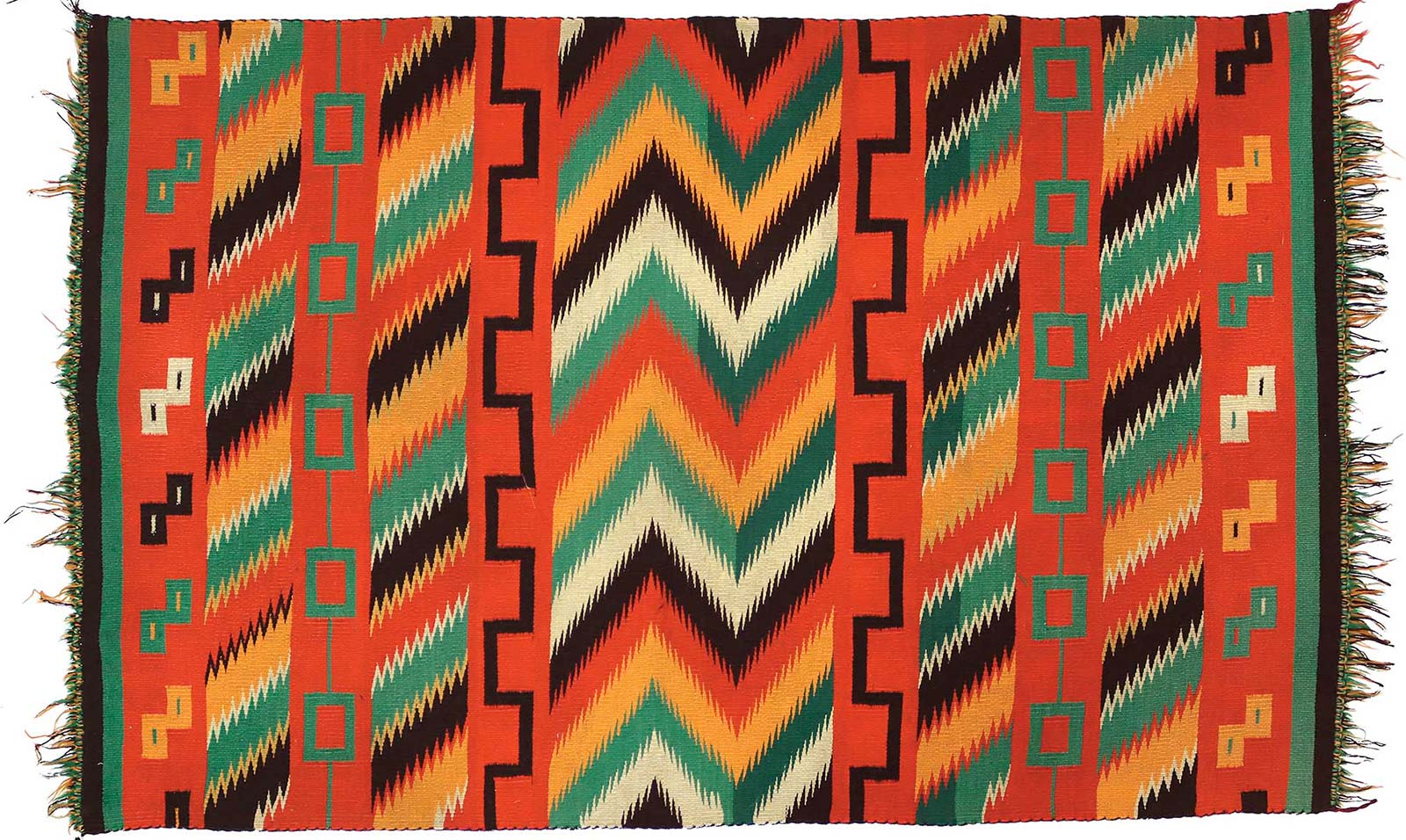
Navajo Germantown textile, 1870-1895, with added Germantown fringe, 35½ x 58 in.
Tucson, Arizona-based art dealer Mark Sublette captured the connection to modern art in his 2017 book Homage to the Square: Navajo Masterpieces 1860-1950, which draws a direct line from the Diné weavers right to the heart of modern art in paintings. “In 1949, Josef Albers conceived his Homage to the Square series which looked at the interaction of multiple progressively smaller colored squares stacked on each other to form a resonance of color and three-dimensional composition. He produced about 2,000 of these square paintings in his lifetime,” Sublette writes. “Gazing intently into these color quadrants, one feels a pulsation of color that changes in depth and sensibility, a unique concept for the time unless you examine Navajo weavings that predate Albers paintings by a half century.”
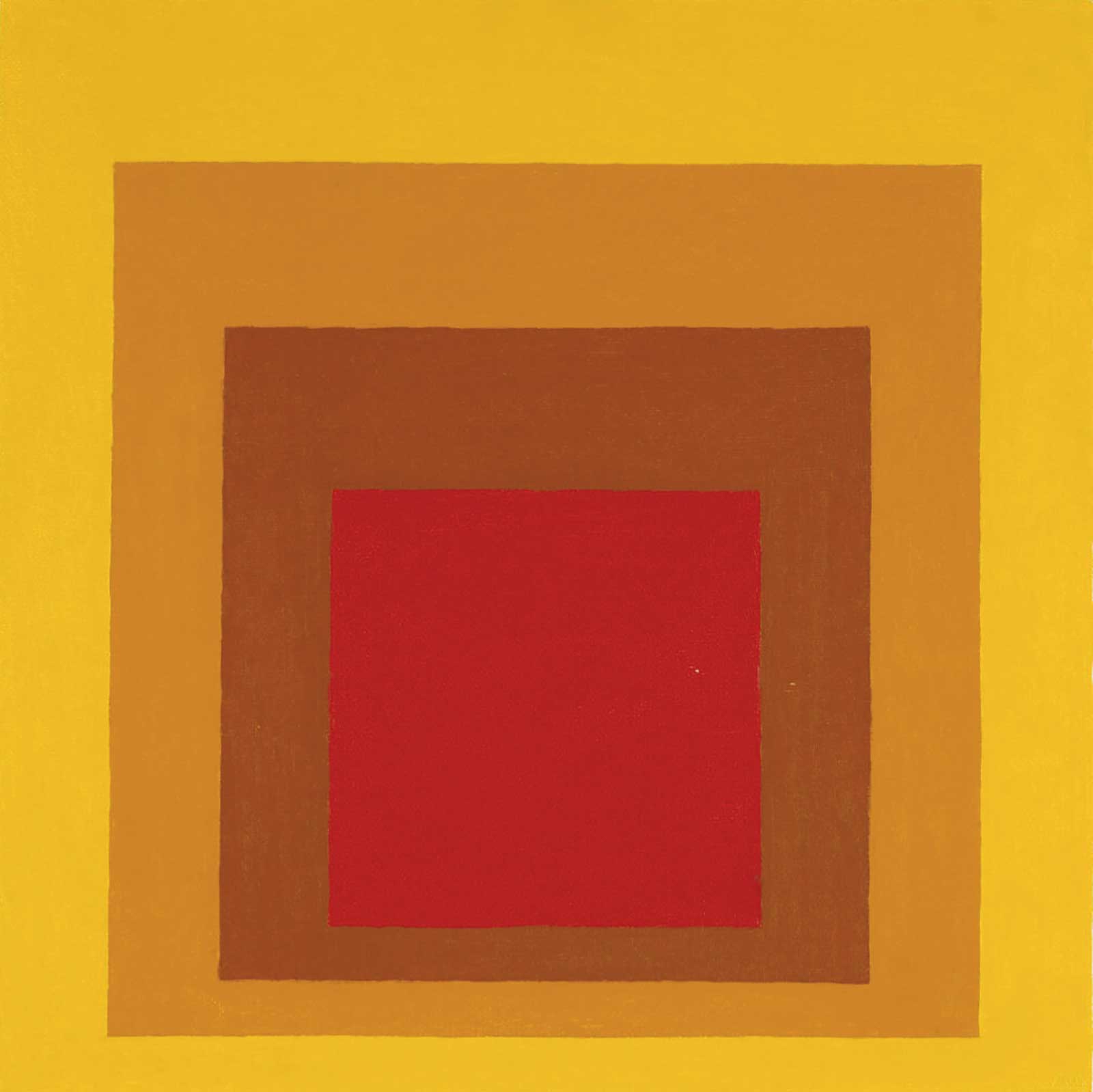
Josef Albers (1880-1976), Study for Home to the Square: “Centered,” 1962, oil on Masonite panel, 24 x 24 in.
Martindale, who estimates that several thousand Germantown weavings have survived, gets a thrill as he highlights the contributions of Navajo weavers. “I still get excited when I see a weaving that I’ve never seen before come up, either at my booth or a gallery or a show or an auction,” he says. “There is still a lot of great material out there, so there’s still more to be learned. It’s my ultimate hope that there are major museum exhibitions in the future that continue to explore Navajo weavers as the first modern artists.” —
Powered by Froala Editor