Debra J. Force is a specialist in American paintings, drawings, prints and sculpture of the 18th through the 20th centuries. In 1999, she opened Debra Force Fine Art, a gallery on New York’s Upper East Side that presents exhibitions in a salon-style space, participates in select fine art fairs, and provides appraisal and consulting services.
A prominent member of the arts community with decades of experience in various public and private sectors of the market, Force recently sat down with us to talk about her journey in the art world.
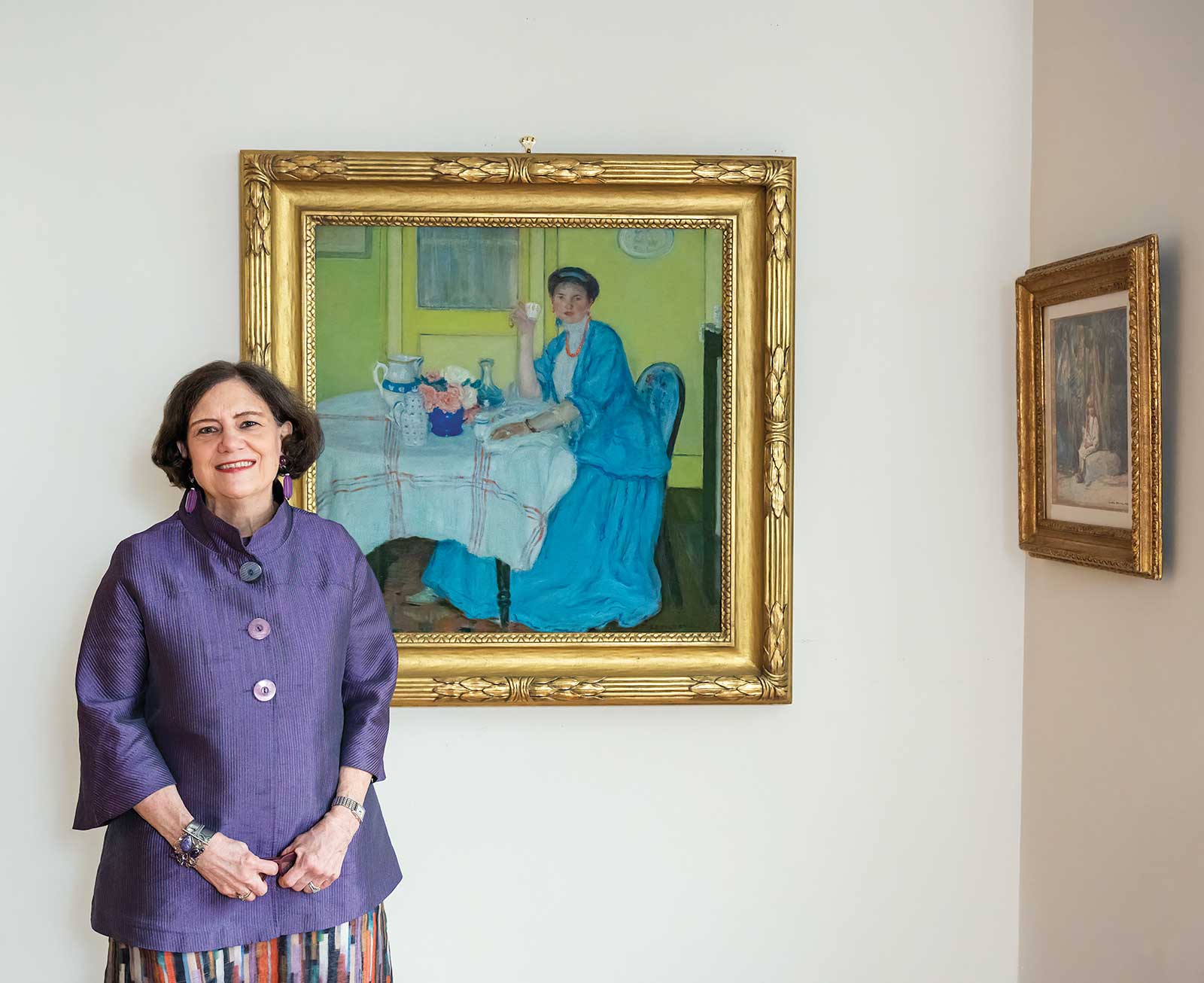
Gallerist Debra Force with works by Frederick Carl Frieseke and Winslow Homer.
When and how did your relationship with fine art begin?
My interest in American art began with my infatuation with American history as a child. I loved historic restorations and was gifted with being able to grow up in Williamsburg, Virginia. I was a historic interpreter during my college summers, but my real exposure to American fine art began when I was curator and director of the CIGNA Museum and Art Collection (formerly INA)…
I was asked to help the corporation build an American paintings collection, beginning with the Pennsylvania Impressionists, and later expanding to other periods of American art as well as contemporary art. It was an exciting opportunity with a fair amount of autonomy for someone just out of graduate school from the University of Pennsylvania. My later positions at Christie’s, Hirschl & Adler Galleries, and Beacon Hill Fine Art furthered my exposure to and interest in American art and gave me the background and experience to open my own gallery in 1999.
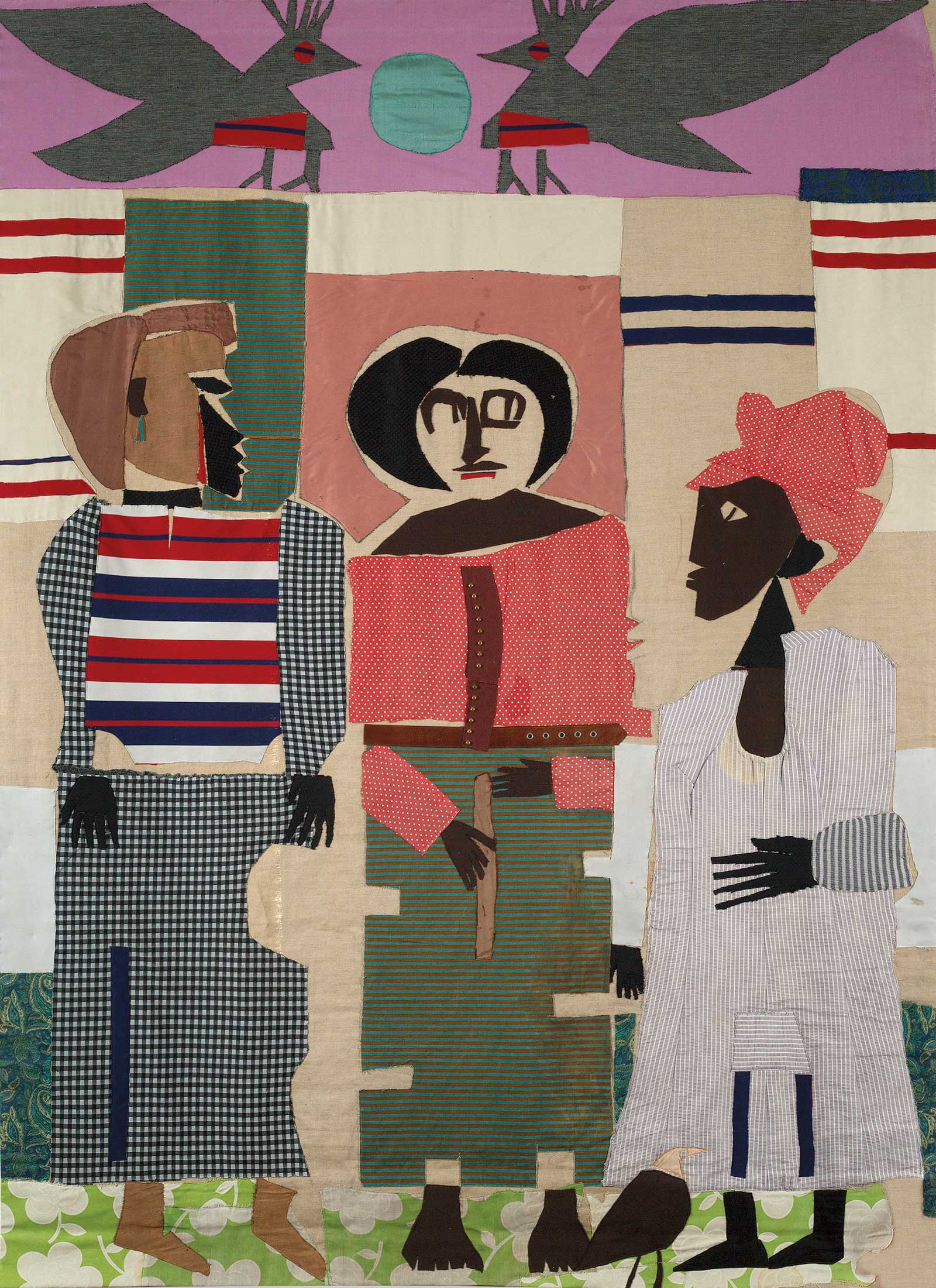
Romare Bearden (1911-1988), Junction Piquette, 1971. Fabric collage on canvas, 92 x 68 in.
How did working at Christie’s prepare you for the work you do now?
The American Paintings Department at Christie’s (1984-1993) opened a whole new field, exposing me to Western art, of which I knew little, and to the myriad of lesser-known American artists that one encounters in the marketplace and not in academia. This “education” learned on the job allowed me to hone my eye in determining quality in any given work. At auction, we saw the best, the average, and poor-quality works as well as fakes. This experience was also crucial to increasing my knowledge of value and pricing, whether for appraisals or in marketing works for sale. I also became acquainted with important collectors nationwide and had the opportunity of visiting their collections and assisting in acquisitions.
Navigating the world of fine art requires not only a keen eye for aesthetic value but also a robust understanding of market dynamics, client relations and historical context.
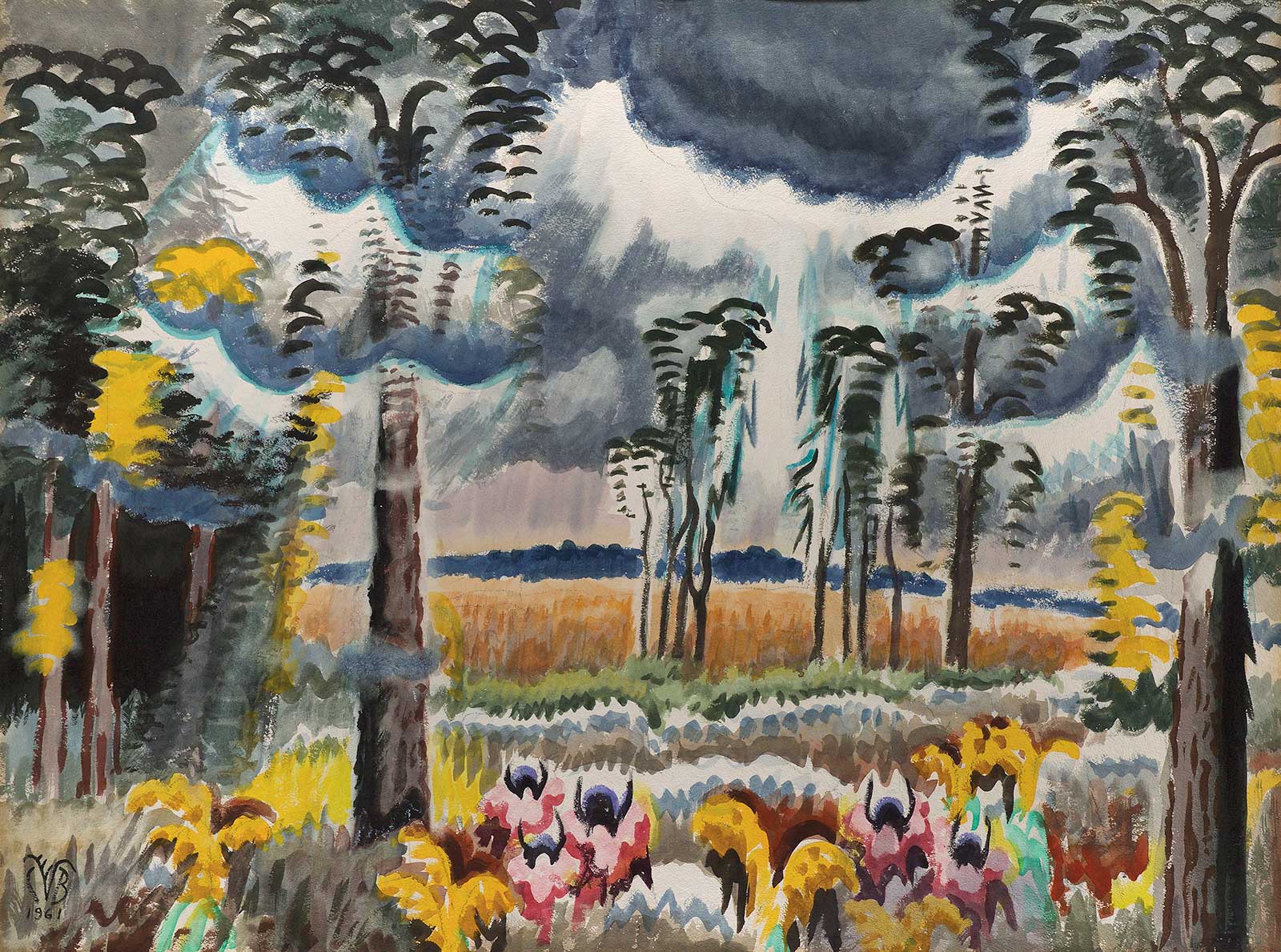
Charles Burchfield (1893-1967), Storm Approaching a Woods, 1961. Watercolor and pencil on paper laid down on board, 35¾ x 477/8 in.
How do you keep yourself savvy in all of these arenas?
Knowing the dynamics of the market is crucial to the success of the gallery. For example, at present, the market for American Impressionism and 19th-century still life and genre painting is soft and thus, this material is more affordable than it was decades ago, which could prove attractive to older buyers, while that for Hudson River School painting is somewhat on the upswing as newer collectors are embracing it. Knowledge of collectors’ tastes as well as of museum “wish lists” are key for knowing where to offer and sell material.
In addition, public relations is an important component to the success of the gallery. This includes creating a welcoming environment for clients, particularly for new ones, whether in person, on the phone, or through email/online interactions, being approachable for questions, and going the extra distance for client satisfaction. A gallerist’s solid reputation is of utmost importance in creating a level of comfort for clients in knowing that the gallerist is above reproach, is transparent in his/her dealings, and has their interests in mind. Developing such relationships and thus, collec-tions, is essential for the survival of the gallery.
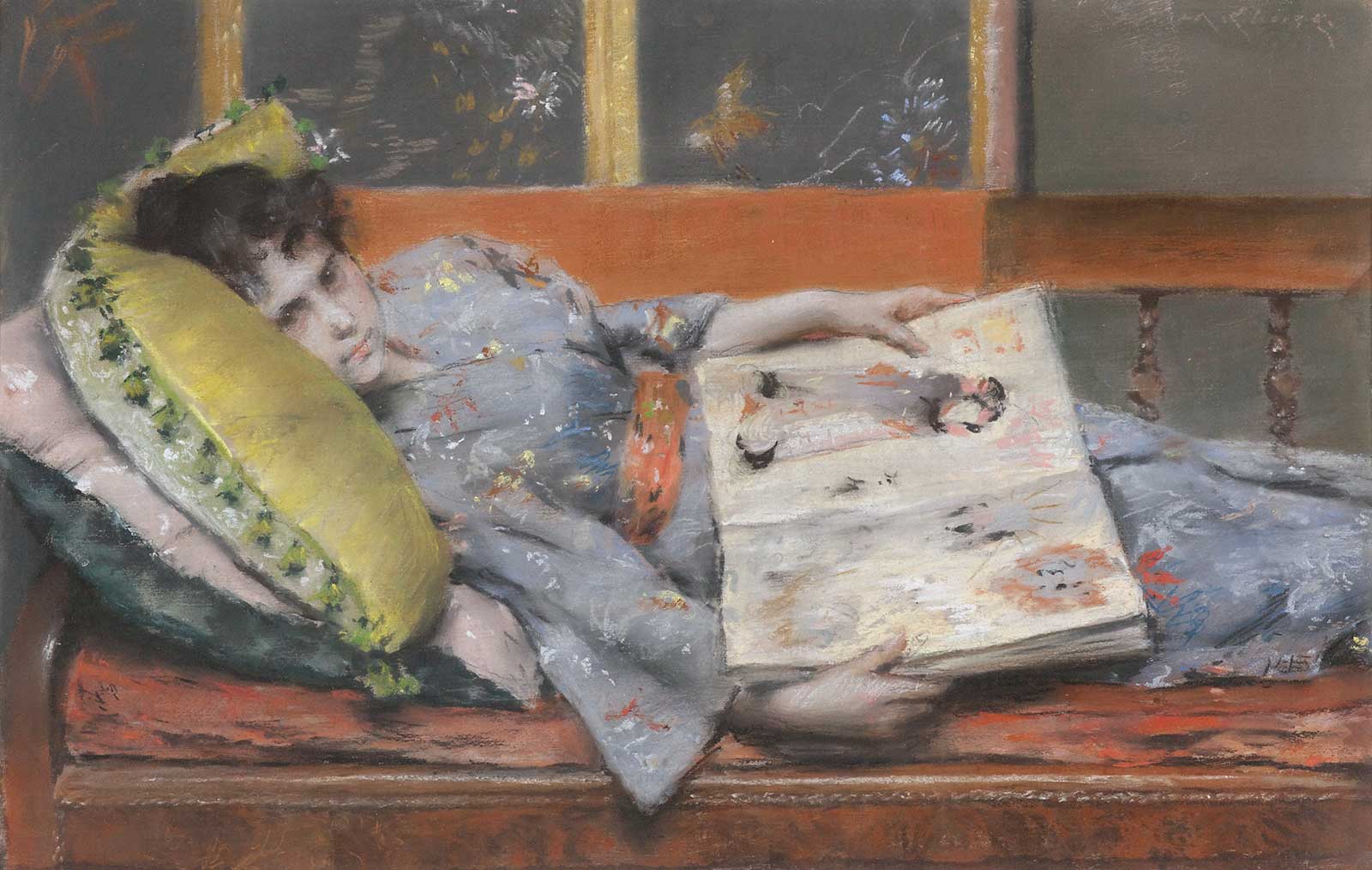
William Merritt Chase (1849-1916), At Her Ease, ca. 1889. Pastel on panel 10½ x 16 in. Promised gift to the Chrysler Museum of Art, Norfolk, VA.
How do you decide a work is the right acquisition for your gallery?
For me, the right acquisition or consignment consists of the following: optimum quality of the work itself and its placement within the artist’s oeuvre, very good to excellent condition, interesting provenance in terms of previous owners, strong exhibition history and inclusion in literature. We enjoy offering works in various price ranges as long as the above criteria are met. It is indeed exciting to discover a work that has only had one owner in its history such as Storm Approaching a Woods by Charles Burchfield that had originally been acquired from the artist’s gallery during his lifetime and remained in one family until we sold it. We are also interested in finding unusual and rare works such as Romare Bearden’s Junction Piquette, a very large fabric collage on canvas, whose owner bought it directly from the artist in 1973.
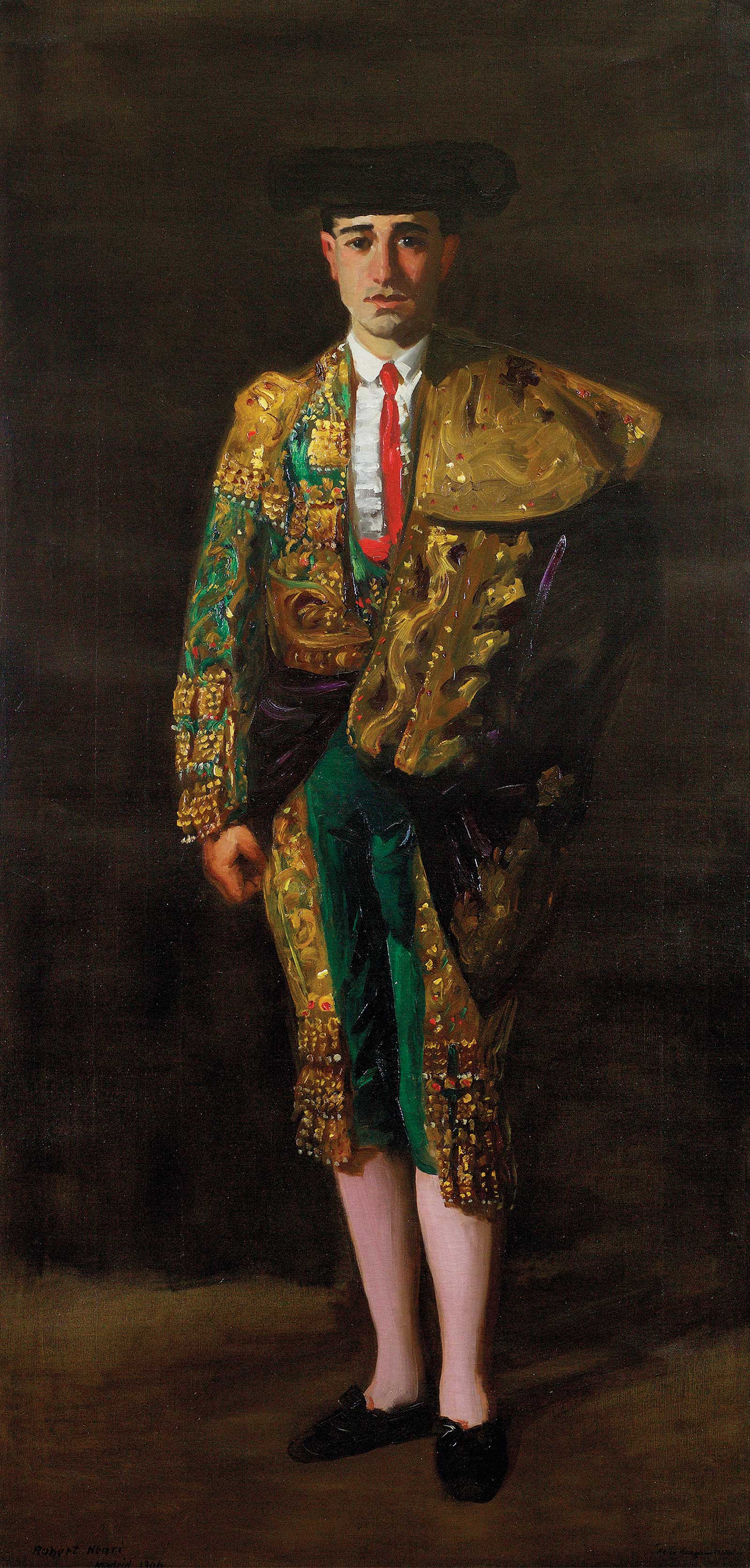
Robert Henri (1865-1929), El Matador, 1906. Oil on canvas, 78 x 37½ in. Milwaukee Art Museum, Milwaukee, WI.
What trends are you seeing in the historic American art market right now?
In the past 10 years, there has been a major push for collecting works by women artists and artists of color, especially by museums…We were particularly lucky to sell Henry O. Tanner’s Street in Tangier from circa 1912, a rarity in the market that we were able to place in a museum collection.
Overall, major works by most artists hold their value no matter what the market is. Thus, although prices have waned for average works for certain artists and from certain periods of American art, a tour de force by John Singer Sargent, as in the case of those offered in the recent auction of the Wall collection at Christie’s, or a monumental Albert Bierstadt, or a large-scale Stuart Davis from the 1960s, would still command a premium.
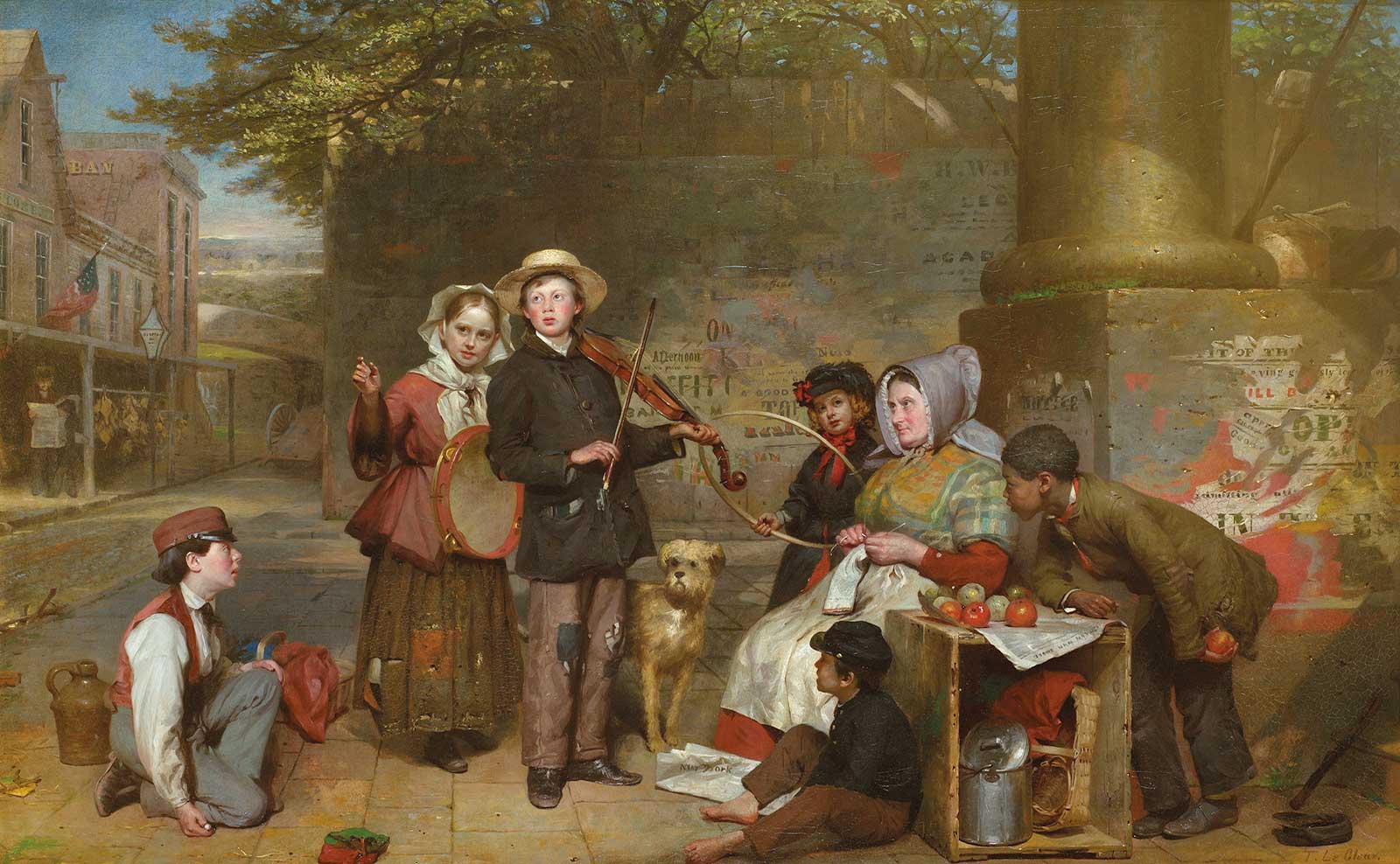
Thomas Le Clear (1818-1882), The Itinerants, ca. 1862. Oil on canvas laid down on board, 25¼ x 40 in.
What do you love most about what you do?
I really enjoy working with collectors and helping them build their collections as well as introducing my field to new buyers. It is also extremely rewarding to sell works to museums and to see them hanging in situ. In terms of special projects and appraisals for museums and private collectors, I welcome the intellectual challenge of valuing masterworks and offering advice. I also love organizing exhibitions and finding an estate or an exciting collection to research and present to the public. Our shows featuring James Jebusa Shannon and Lockwood De Forest were particularly well received.
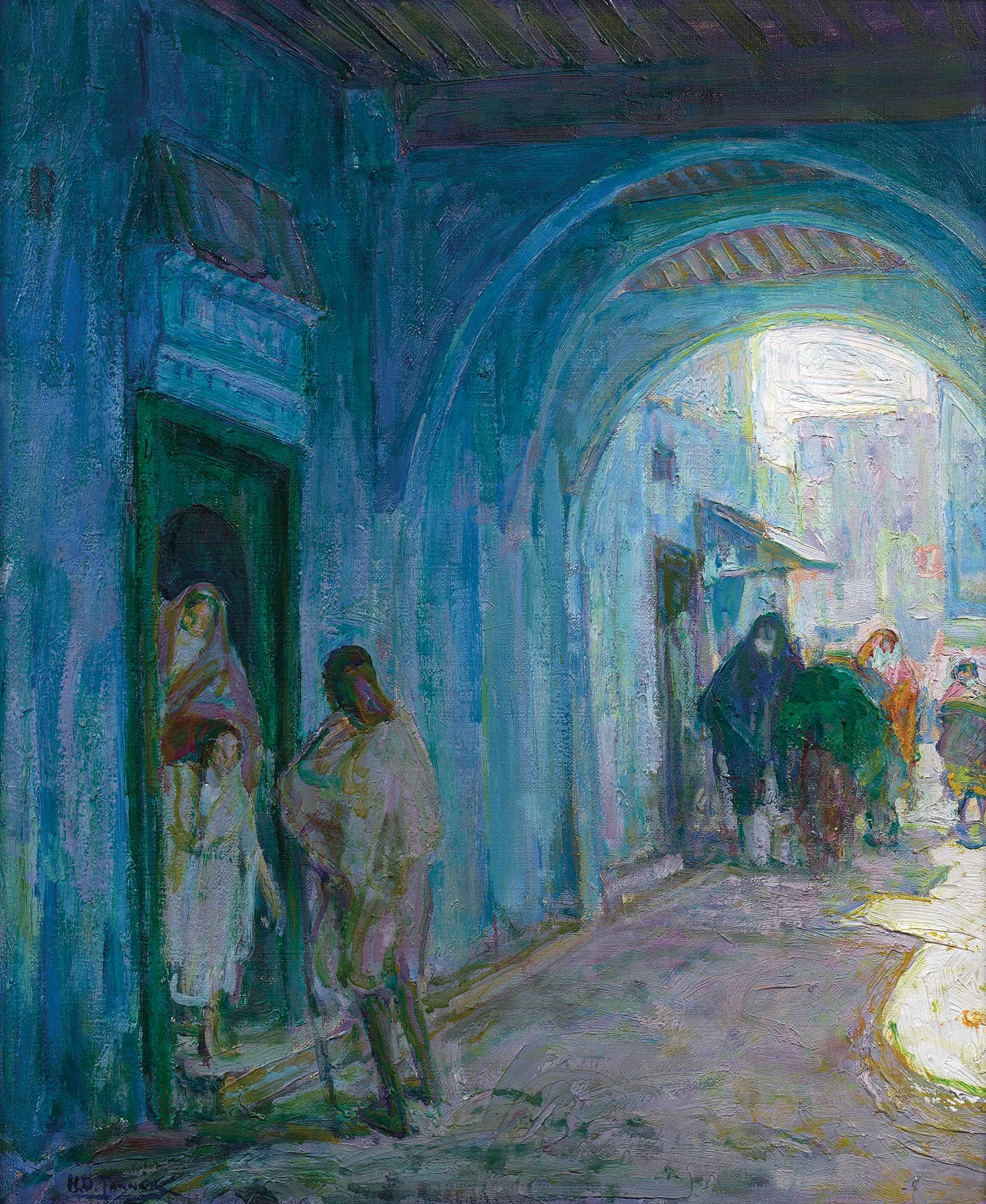
Henry Ossawa Tanner (1859-1937), Street in Tangier, ca. 1912, Oil on canvas, 24 x 20 in. Montgomery Museum of Fine Arts, Montgomery, AL.
Any particularly memorable anecdotes from the gallery’s long history?
Two of the most interesting works that we’ve sold include William Merritt Chase’s At Her Ease from circa 1889, a richly executed pastel of the artist’s wife in her kimono relaxing on a sofa. I was recommended to the owners of this work whose family had owned it since the 1930s. In impeccable condition and previously unlocated and therefore “a find,” it was a quintessential example for the artist and will eventually find a home in a museum given the new owner’s generosity.
Expectations for finding works can be a surprise. In 2012, an insurance agent recommended me to help a family in Denver sell a work they inherited. When I arrived, I was taken to a bedroom, where a large genre scene of Brooklyn from circa 1862 (The Itinerants) was removed from under the bed where it had been kept for “safe keeping.” It turned out to be a tour de force by the rare artist Thomas Le Clear, which we ultimately placed in a prominent collection.
In working with artist’s estates, we had the opportunity of handling major portraits from the estate of Robert Henri. One of the most provocative was El Matador, which featured an actual bull fighter whom the artist encountered in Spain in 1906. His richly designed costume and regal stance attracted the Milwaukee Art Museum, where it hangs today.
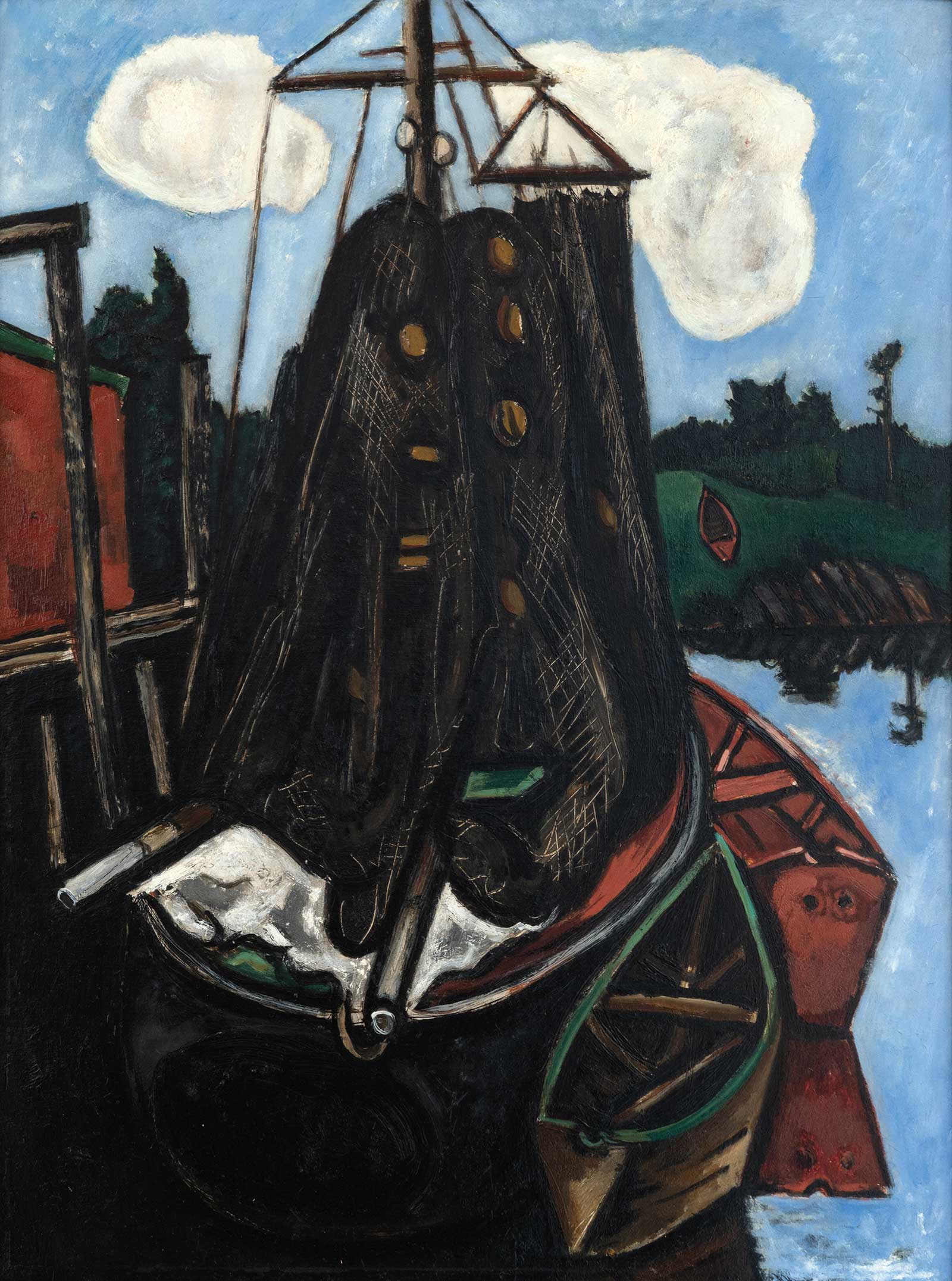
Marsden Harley (1877-1943), Fishing Boats No. 2, ca. 1936. Oil on board, 24 x 18 in.
You have appeared as a specialist paintings appraiser on the PBS series Antiques Roadshow since 1999. Any stand-out stories to share from your experiences on the show?
Being on the show has been great fun and intriguing as one never knows what you might discover. The most rewarding spots are those where the guest cannot read the signature or has no knowledge of the artist.
One of my favorite spots was with an elderly farmer from Minnesota who had two paintings that he bought at a rural auction for $4. The one he liked was more decorative, but worth about $800 for which he was pleased. As for the other…it turned out that it was by the Taos, New Mexico, artist Victor Higgins and was worth $100,000. He was nonplussed and went on his way. Since we are not allowed to solicit at the show, I therefore had no further contact with him, until an appraiser friend of mine, whom he happened to contact, called me about the painting, surmising that I had aired it on the show. As a result, I got it for sale.
At times, I handle works owned by people who only watch the show. One of the most memorable is a Maurice Prendergast watercolor of St. Malo, owned by one of the caregivers for Mrs. Charles Prendergast, who allowed her to select one of her brother-in-law’s works. Numerous dealers had tried to pry it loose from her, but one of them knew the owner’s love of Antiques Roadshow. I was thus invited to visit her—the work was hanging in a hallway with a terry cloth towel covering it to protect it from light—and was entertained with cocktails. I ultimately got the work for sale, all because of the Roadshow.
Antiques Roadshow has enabled me to meet so many people and to impart knowledge to those bringing their works for appraisals. Most of what we see is of very minimal value, but over the years, I have found works by George Bellows, Jasper Cropsey, Joseph Kleitsch, William Robinson Leigh, Willard Metcalf, Norman Rockwell, N.C. Wyeth, and numerous others. It has been quite an adventure.
If it’s possible to sum up, what is your major takeaway from nearly 30 years in this business?
I have been fortunate in being able to work with the art I love and in meeting so many collectors, some of whom I have helped with expanding their collections. I have been rewarded by placing works of art in nearly 100 museums nationwide. I cannot imagine a greater experience. —
Powered by Froala Editor