Long before it was synonymous with Hamptons glitz, Long Island served as a bucolic refuge from the intensity of New York City for artists of all kinds. Although prominent 19th- and early 20th-century artists like William Merritt Chase, Thomas Moran, Fairfield Porter, Agnes Pelton and Georgia O’Keeffe painted there, it was undoubtedly the pioneers of abstract expressionism—namely Jackson Pollock, Lee Krasner, and Willem and Elaine de Kooning—that firmly positioned Long Island’s significance in the annals of art history.
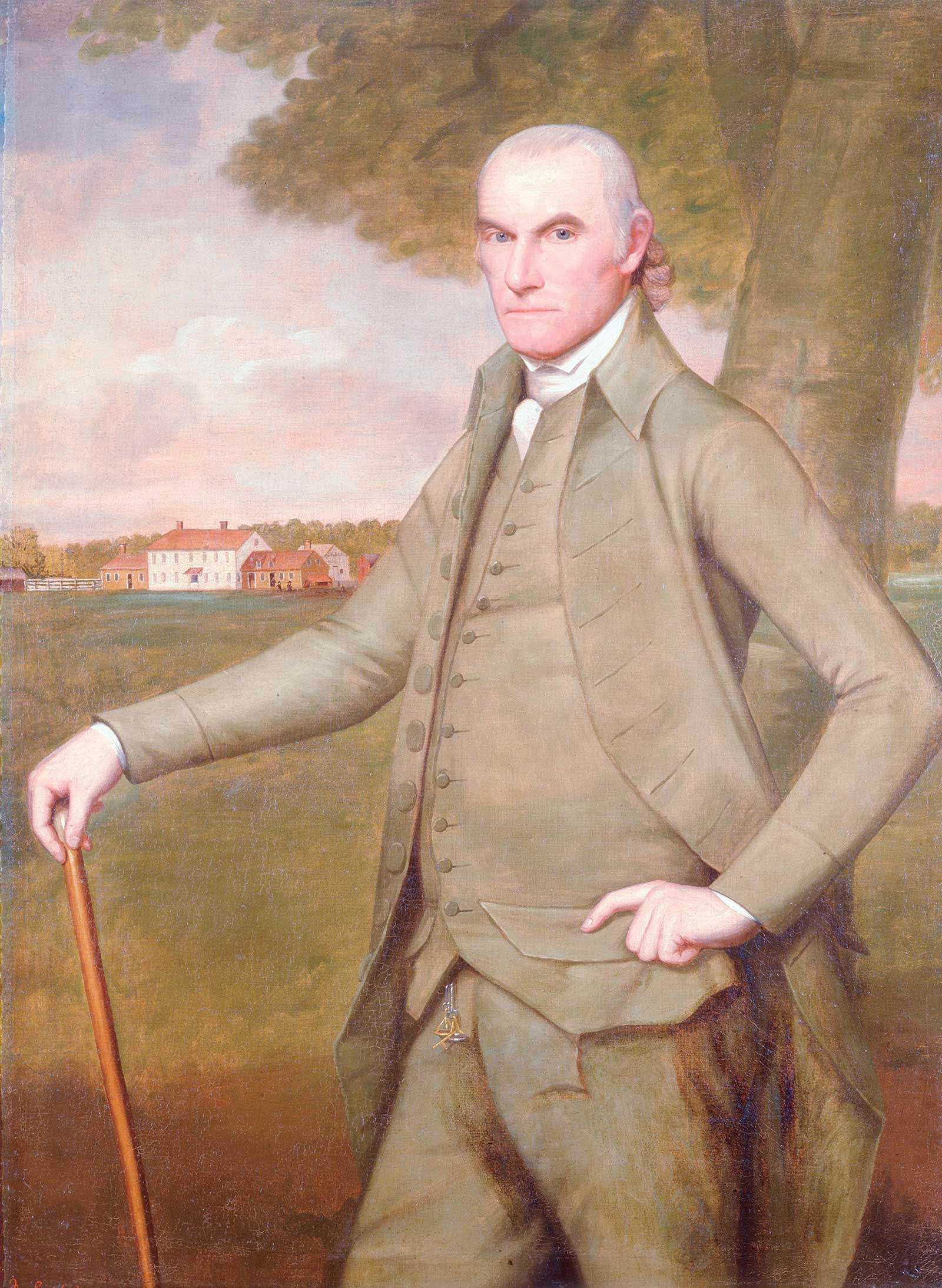
Ralph Earl (1751-1801), William Floyd (1734-1821), ca. 1793. Oil on canvas, 523/8 x 40½ x 33/8 in. Independence National Historic Park Collection, Philadelphia, Pennsylvania.
A new exhibition at the Nassau County Museum of Art in Roslyn, New York, only an hour train ride from Manhattan, is celebrating Long Island’s creative legacy since the country’s founding with a series of multi-media exhibitions that are currently on view through July 12. Featuring more than 100 artworks, 250 Years of Art on Long Island spans Revolutionary-portraiture and folk art to 19th-century landscapes and impressionism, high-impact abstract expressionism and Pop Art and beyond, emphasizing how all movements of historic American art found expression on the island.
Associate curator Alex C. Maccaro explains, “In this eclectic exhibition, we sought to include major figures of art history while also showcasing contemporary discoveries. We wanted to cover artistic movements that have a Long Island parallel, ranging from Federalist portraiture to impressionism to various contemporary styles.”
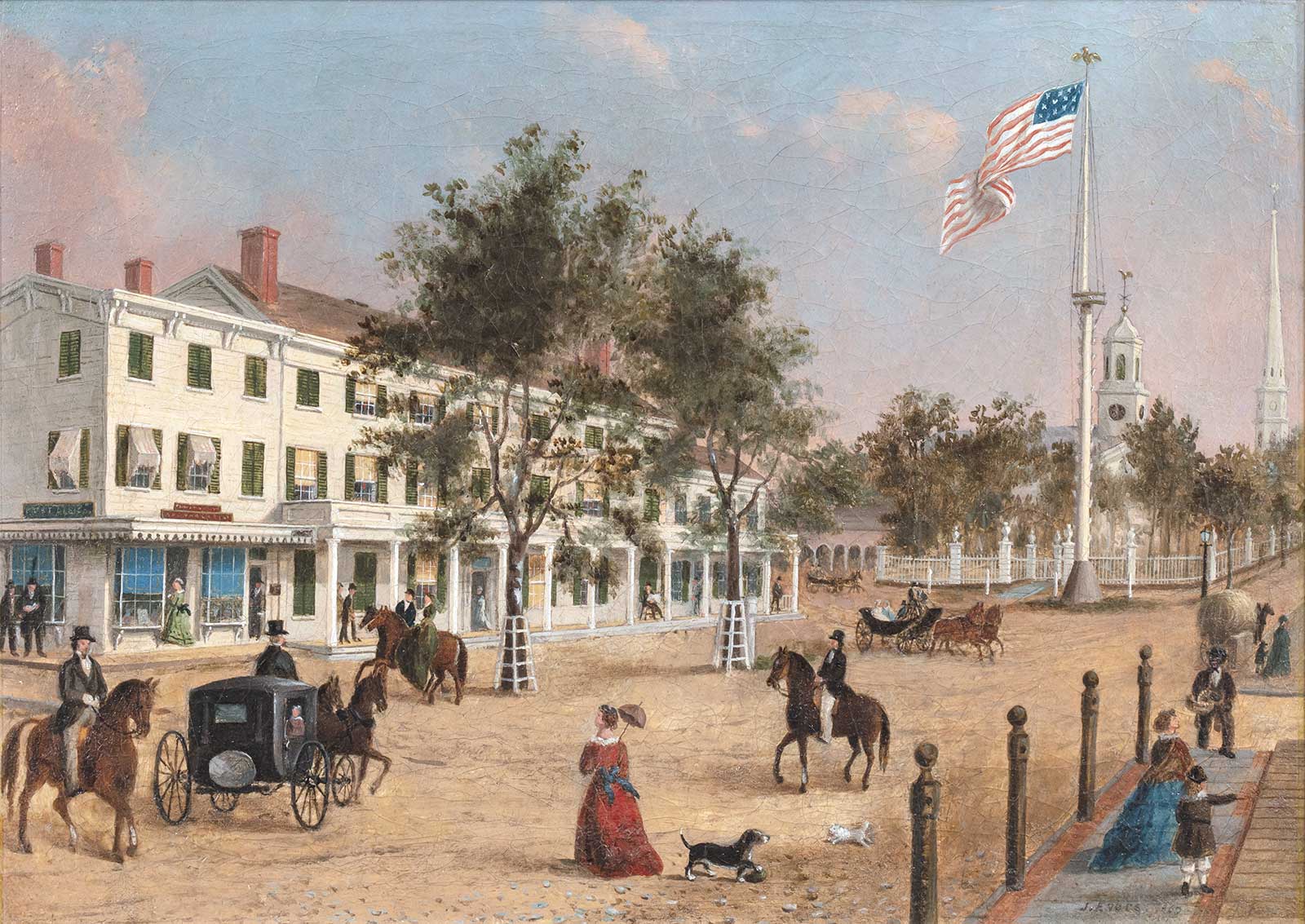
John Evers Jr. (1797-1884), Front Street, Hempstead, 1869. Oil on canvas. Collection of Preservation Long Island; Preservation Long Island Purchase, 2011.1.
Chief curator Franklin Hill Perrell adds, “As curators, we selected works that would tell the story through color, graphic strength and visual appeal. Episodes like Victorian genre painting, topographic realism, romantic naturalism and luminism, and American impressionism manifest on Long Island and culminate with abstract expressionism, which had no equivalent elsewhere, the latter inspiring contemporary artists.”
A major section of the exhibition will highlight the “Trailblazers of Abstract Expressionism,” drawn from the expansive private collection of museum trustee Rick Friedman. With a focus on the Hamptons as a hotbed for post-war abstract artists, the grouping features rare early works by Mark Rothko and Jackson Pollock as well as vibrant examples by Lee Krasner, Audrey Flack and Charlotte Park.
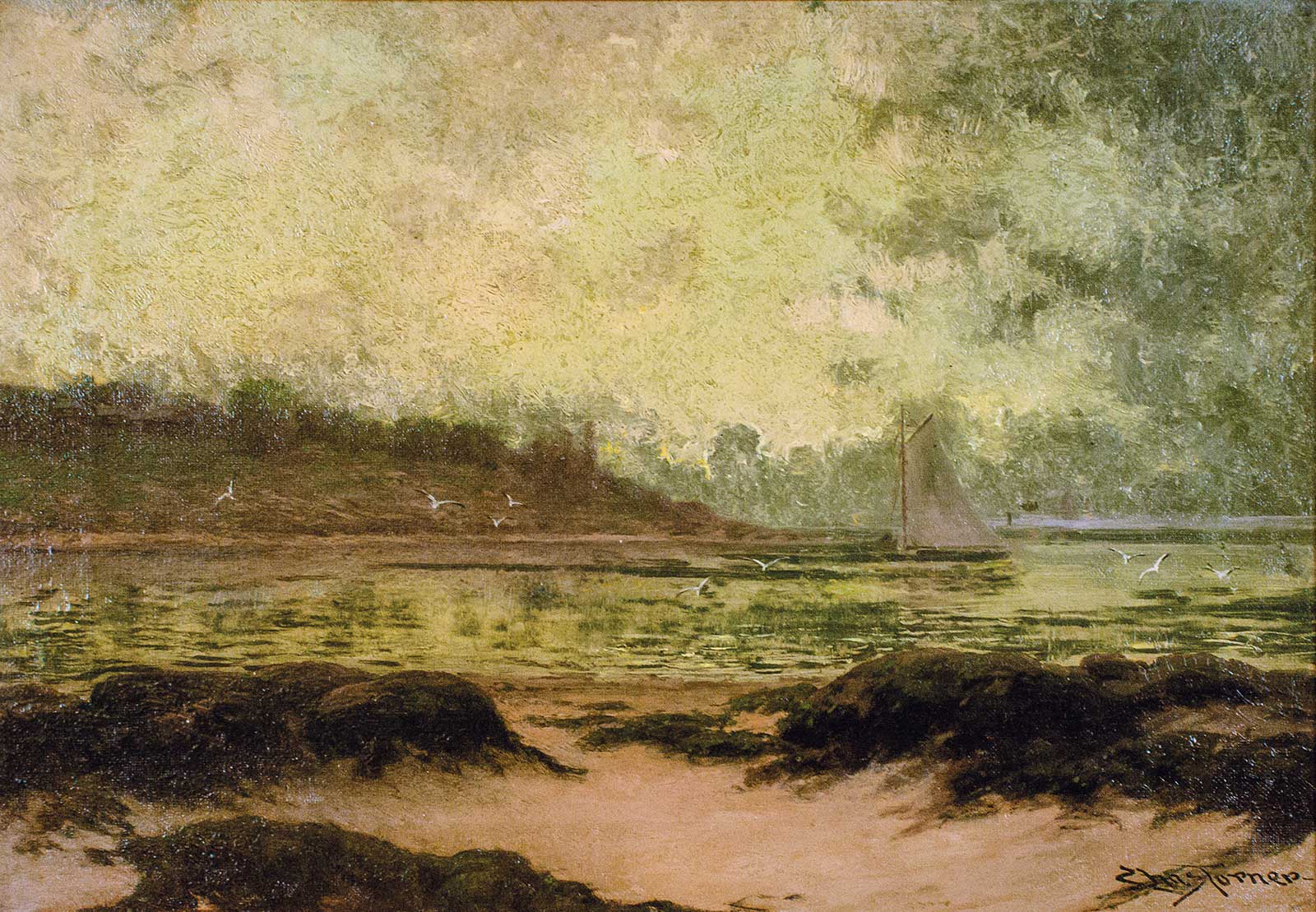
Julian Onderdonk (1882-1922), Shelter Island, Long Island, New York, ca. 1905. Oil on canvas, 14 x 19½ in. Collection of Jeffrey and June Gold; courtesy of Lincoln Glenn Gallery.
In addition to Krasner’s Offbeat, 1953-56, another major highlight in the exhibition is Chase’s Alice with Wolfhound, a 1903 depiction of the artist’s daughter and favorite model, Alice Dieudonné Chase, that Perrell says “has a glamor that rivals John Singer Sargent.” In the background are Southampton’s sandy Shinnecock Hills where Chase had a summer studio. An early work of note is a painting by Ralph Earl of American founding father William Floyd on his vast farm and estate, now part of Fire Island National Seashore. “This painting shows the significance of Long Island in the Revolutionary and Federalist era,” explains Maccaro. John Evers Jr.’s Front Street, Hempstead offers a historic view of a bustling Long Island town, “reflecting the 19th century’s pride of place and the notable pursuit of the commemoration of towns and villages.” American Impressionist Julian Onderdonk’s Shelter Island captures the appeal of Long Island’s beaches. “As art colonies were established on Long Island’s East End, the landscapes and seascapes provided an escape from the rapidly industrializing New York City at the turn of the century,” shares Maccaro.
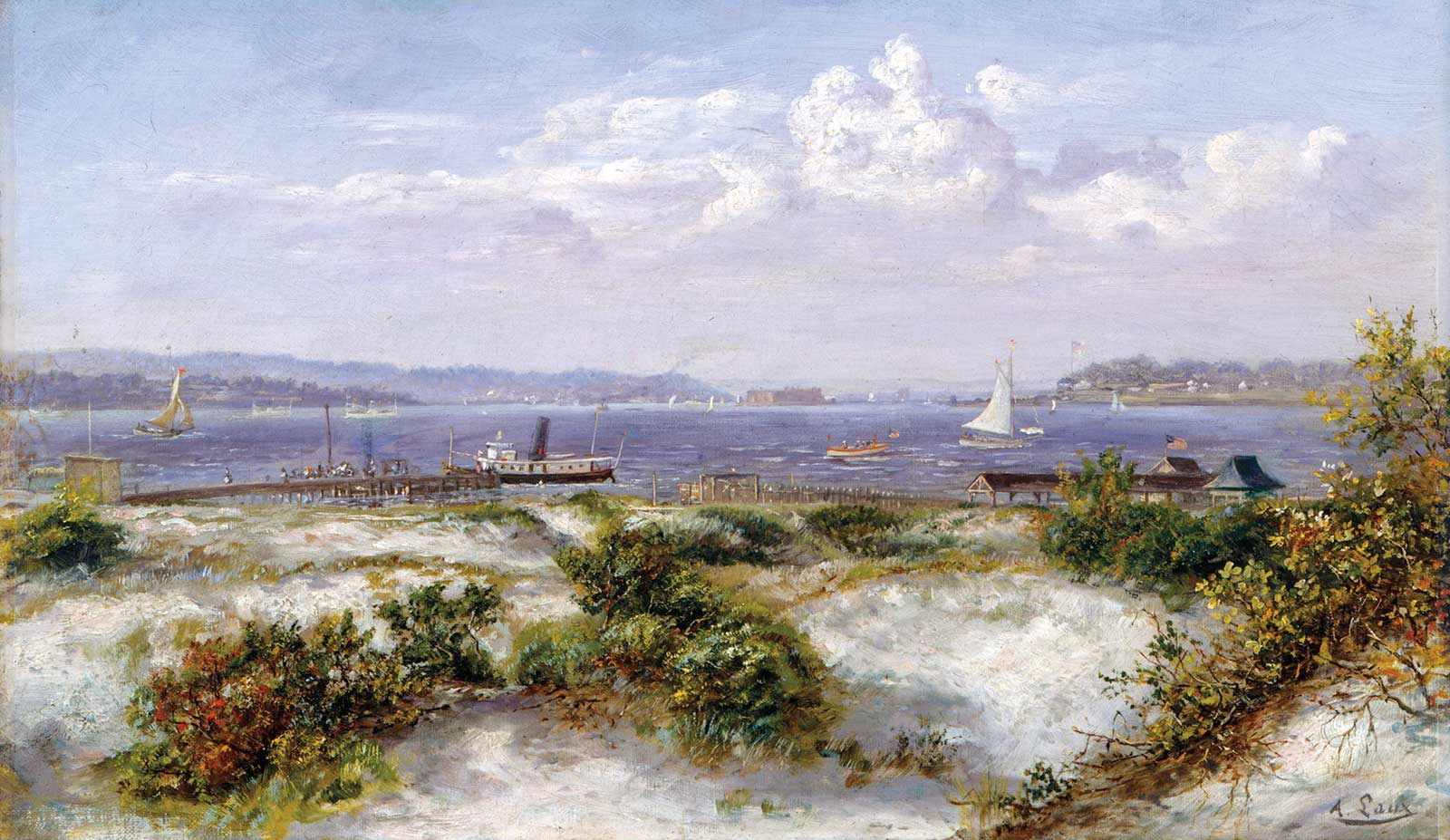
August Laux (1853-1921), View of Brooklyn and Staten Island from Coney Island, ca. 1890. Oil on canvas, 1115⁄16 x 20 in. Lent by the Brooklyn Public Library, Center for Brooklyn History.
Among the contemporary works, Perrell points to ink and watercolor works by New Jersey-based Michael White that pay homage to historic landmarks like the still-extant All-American Hamburger Drive-In. April Gornik’s romantic landscape Light Passing is a personal favorite of Perrell’s, “capturing in one singular work the artist’s capacity to reinvent, in her own fusion, the best past traditions in earlier American painting: Hudson River School and luminism, without portraying any specific geography, evoking the tranquility and contemplative ambience of the artist’s Sag Harbor studio.”
250 Years of Art on Long Island can be viewed alongside the exhibitions Influence and Identity | Twentieth Century Portrait Photography from the Bank of America Collection; Profiles in Color: Paintings of Andres Valencia; and National Pastime: The Baseball Show. Visit the museum website for details. —
Powered by Froala Editor