

Stemming from an interest in exploring the many dimensions of the Gilded Age through a lens of beauty, atmosphere and lived experience, is the exhibition Golden Hour: Charles Courtney Curran and the Romance of American Impressionism. Visitors of the Flagler Museum will find 14 paintings, 28 photographs, and eight cotton and lace dresses from the period that help deepen the atmosphere of the installation, and illuminate the world Curran’s subjects inhabited.
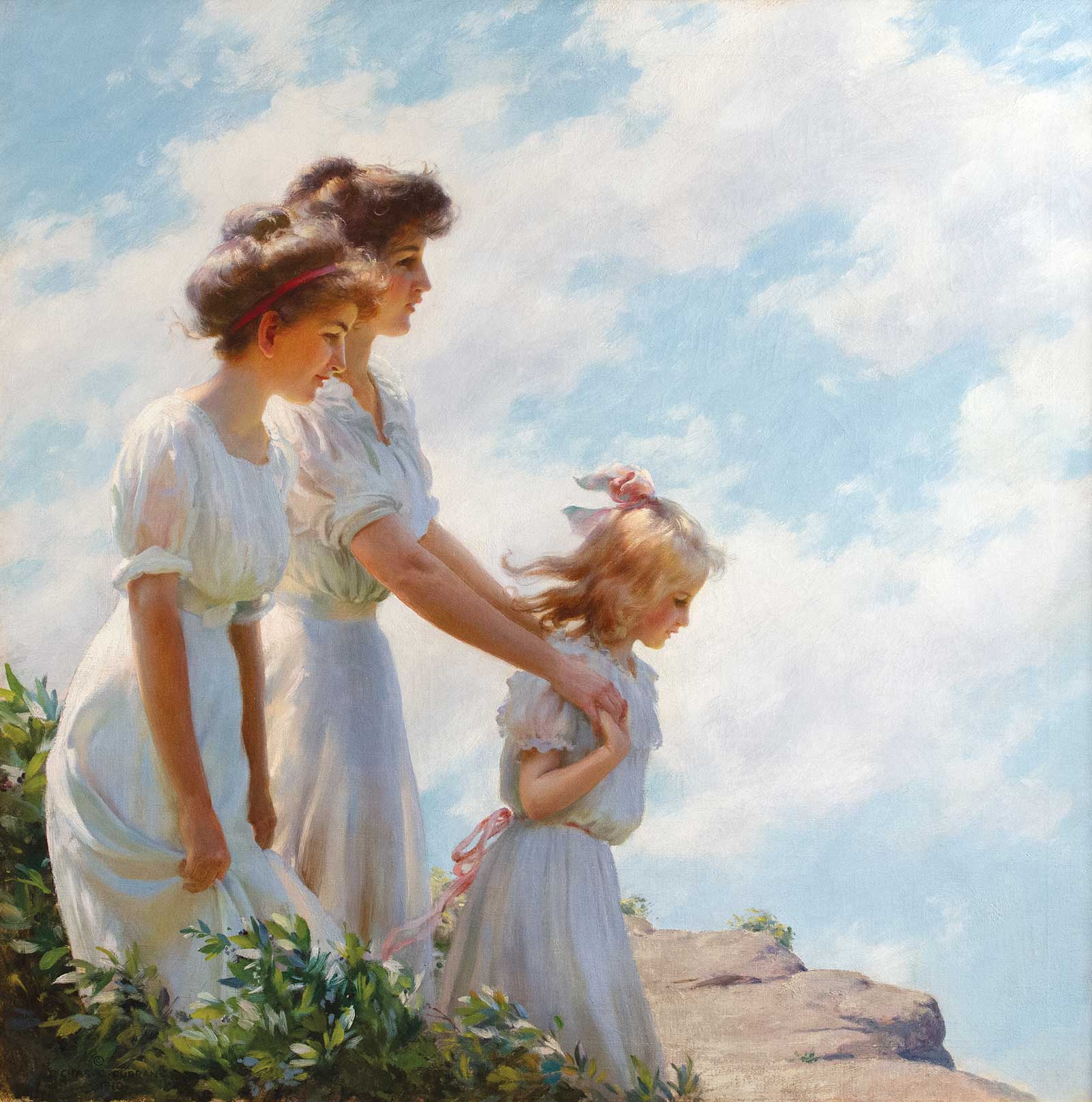
Charles Courtney Curran (1861-1942), On the Cliff, 1910. Oil on canvas. Berg Family Collection. Image Courtesy of Albany Institute of History & Art.
The Flagler Museum is always looking for ways to interpret this period beyond architecture and biography alone, “to show not only how people built and inhabited these grand environments, but also how they imagined leisure, elegance and modern life,” says Campbell Mobley, chief curator at the museum.
“What brought [the exhibition] together,” Mobley continues, “was the realization that Curran’s paintings could do more than stand as examples of American impressionism. They could transform the gallery into an experience. Rather than organizing the exhibition as a conventional retrospective, we approached it as an immersive meditation on light, mood and romance. The works were selected not simply because they are beautiful, but because together they tell a story about atmosphere: sunlight filtering through interiors, women in gardens, moments of pause and contemplation, and the emotional texture of leisure. In that sense, the exhibition is as much about a feeling as it is about an artist.”
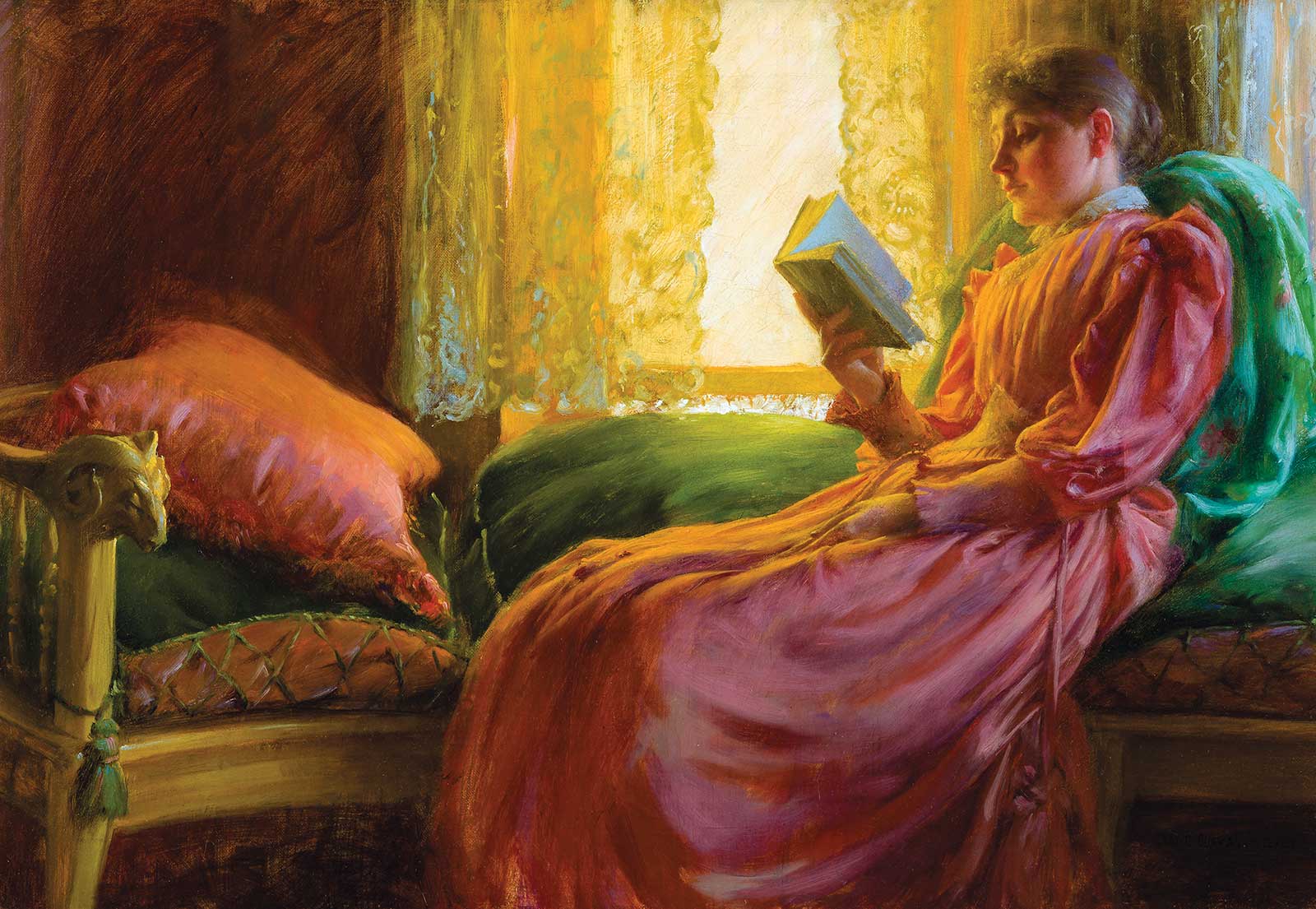
Charles Courtney Curran (1861-1942), Girl in Window Seat, 1892. Oil on canvas. Berg Family Collection. Image Courtesy of Eric Baumgartner.
The exhibition, while anchored in Curran’s work, is organized thematically rather than chronologically. Mobley wants visitors to experience the exhibition almost the way one experiences light over the course of a day, or a memory unfolding. The installation of works moves through a series of visual and emotional ideas: the artist himself and his practice, the role of light, the rituals of leisure, the interplay between nature and femininity, and the dreamlike quality that makes Curran’s paintings feel so enduringly romantic. The exhibition begins by grounding visitors in Curran as an artist, including a portrait of him and objects that suggest artistic practice. From there, it opens into his most compelling subject matter: women bathed in sunlight, seated in interiors, gathered in gardens or poised against dramatic landscapes.
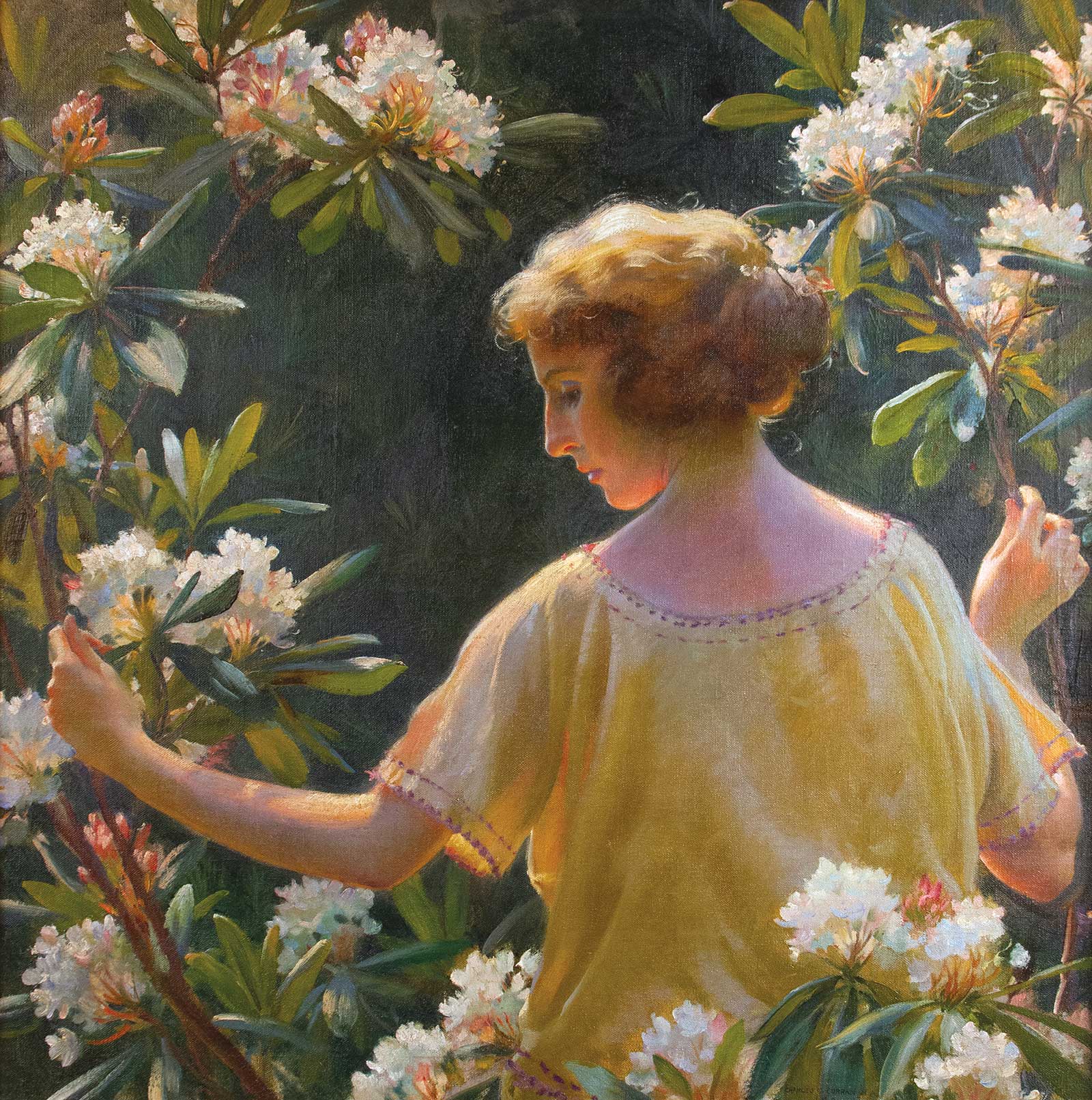
Charles Courtney Curran (1861-1942), Rhododendron Bower, 1920. Private Collection. Image Courtesy of Albany Institute of History & Art.
Mobley notes that Curran’s work On the Cliff, 1910, is one of the most dramatic and compelling works in the exhibition, “because it expands our understanding of Curran beyond the garden idylls for which he is often best known,” she says. “Here, the figure is poised within a vast, natural setting, and the emotional effect comes from the tension between human elegance and the grandeur of the landscape. What makes the painting so significant is Curran’s ability to balance refinement with openness. The female figure remains exquisitely composed, yet she is placed at the edge of something expansive and elemental. The cliff setting introduces a note of drama and possibility, and the work feels almost cinematic in the way it frames contemplation against the horizon.”
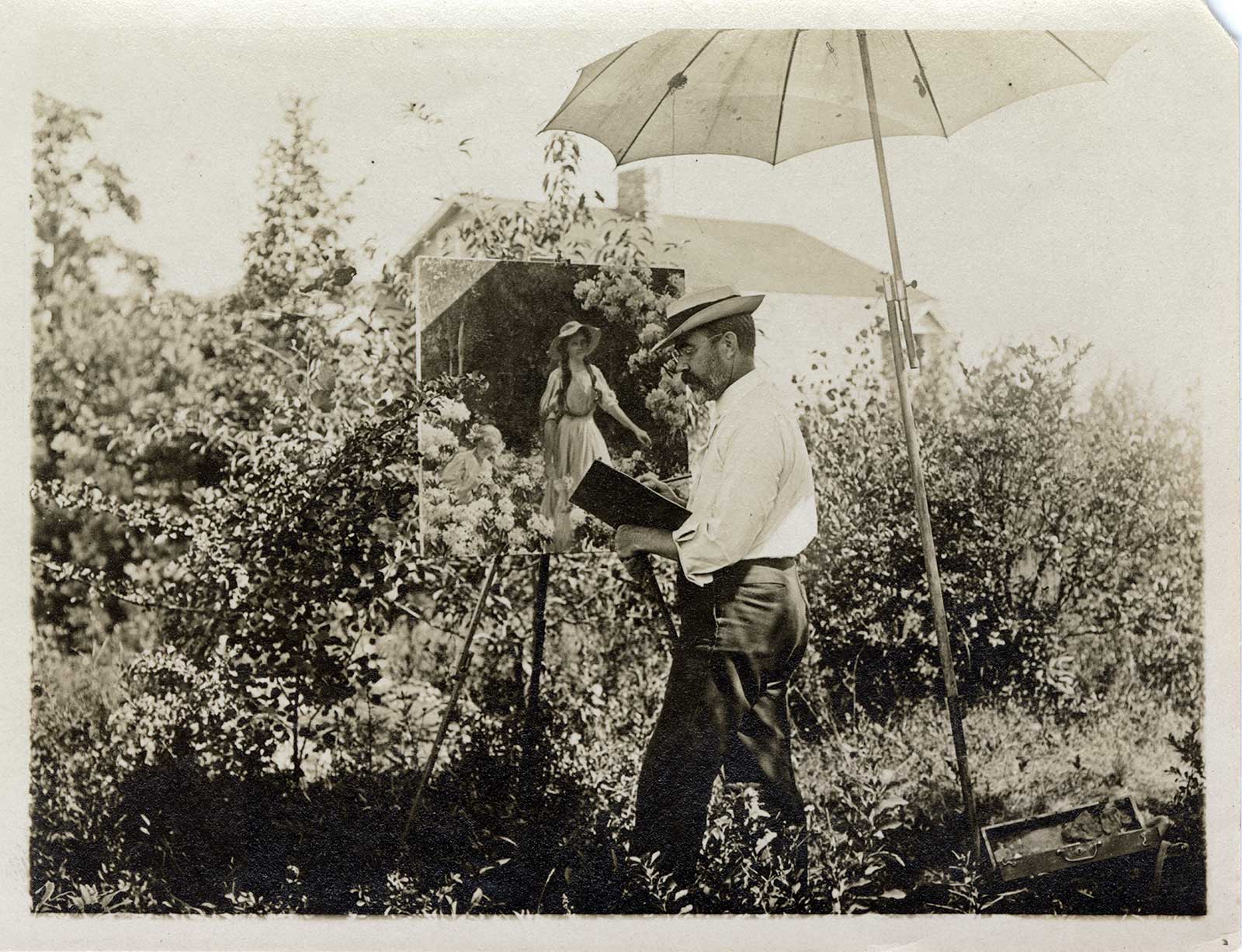
Charles Curran painting at Cragsmoor. Unidentified photographer, ca. 1910. Gelatin silver photograph. Berg Family Collection. Image Courtesy of Albany Institute of History & Art.
Mobley continues to share that within the exhibition, On the Cliff helps demonstrate that Curran’s “romance” is not merely decorative. It is psychological. He was interested in the emotional charge of a moment, in what it feels like to pause, to look outward, to inhabit beauty while also sensing the larger world beyond. It pairs beautifully with works such as Reverie and Breath of the Wild Azaleas, which similarly use nature not just as a backdrop, but as an active force in the mood of the picture.
Other significant works in the exhibition include the intimate and sophisticated Girl in Window Seat, 1892; and Rhododendron Bower, 1920, showing Curran’s extraordinary ability to orchestrate color and atmosphere, and especially aligns with the Gilded Age sensibility.
Head to the Flagler Museum in Palm Beach, Florida, through May 24, to view more of Curran’s work alongside elements that bring the artist’s world alive. —
Powered by Froala Editor