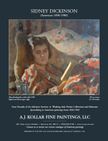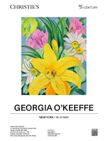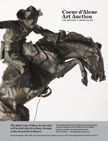
There are 101 artists inside this issue (go on, count them), and many more works of art. Generally speaking, our coverage in American Fine Art Magazine encompasses paintings and sculpture created between the mid-1800s and 1960, with earlier works of relevance (such as Charles Willson Peale imagery from the 1700s) and works as late as the 1980s and early 1990s making an appearance as dealers and auctions establish increasing value in new markets, and as what qualifies as “historic” advances with time.
This issue, with its focus on American modernism, has a particular emphasis on the first half of the 20th century, a time that marked a dramatic shift in our country’s identity that was uniquely—and diversely—reflected in its artistic expression.
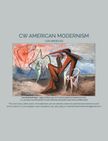
Chris Walther of CW American Modernism would argue that “in many important ways, the modern world was born during this period, and the artists who lived and worked then began to grapple, as artists do, with many of the significant questions about race, gender, equity, diversity, equality, justice, mental health, political power, technology and the environment that are still with us now.”
In the aftermath of World War II, as artists, dealers and collectors from war-torn Europe flocked to New York, the center of the art world emigrated with them and, for the first time, America had the cachet of Paris—as the epicenter of art in the West.
By America, we really mean New York, and as you read about the 101 artists in these pages, pay special attention to just how many—most, I’d wager—spent time in the city at some point in their careers. They came from Europe. They came from the rural Midwest and segregated South. They danced at the same jazz clubs, studied under the same famed teachers. Some formed loose collectives, others were key figures in localized movements like the Harlem Renaissance. But everything happening in New York had much broader, and equally significant, implications elsewhere.
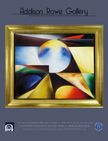
In the Modernist Perspective, a special section that begins on Page 48, Addison Rowe Gallery points out the direct corollaries between the art scene in New York and New Mexico, as artists moved fluidly between the creative enclaves, and found that the quintessential modernist stylings of geometric forms and dynamic color were as applicable to the New York City skyline as they were to the undulating landscapes of the Southwest.
Yes, for a time New York was the heartbeat, but it was its melting-pot nature that made it so vital. For many creatives, it was a watering hole—a place to hone their skills, fill up on inspiration and make connections that they would carry with them when they moved back home or settled elsewhere, outside the hustle and bustle of the city, where they could really get down to the business of making art.
You will see the amazing fruits of their labor inside this issue. I hope you are awed by the artwork, the life stories and tenacity of a generation that made this segment of our country’s art history so rich with enduring appeal.
Sarah Gianelli
Managing Editor
sgianelli@americanartcollector.com
Powered by Froala Editor