
The Bauhaus was founded in 1919 in Weimar, Germany, by architect Walter Gropius (1883-1969). Its core objective was a radical one: to reimagine the material world through the unification of art and design. In the Proclamation of the Bauhaus, 1919, Gropius outlined a utopian vision of a creative guild in which architecture, sculpture and painting would merge into a single artistic expression.
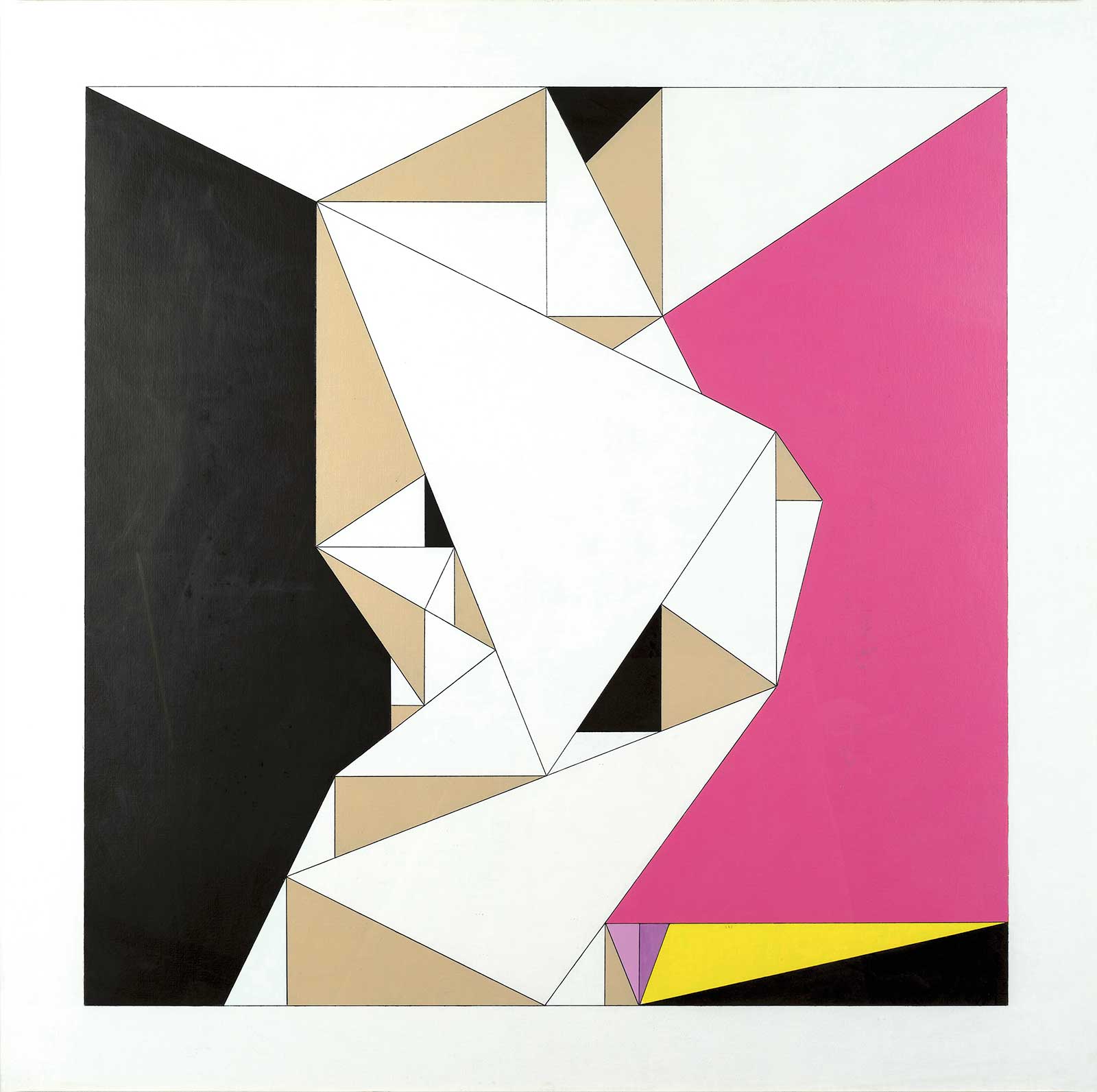
Walter Allner (1909-2006), Untitled (#94), ca. 1960-70. Acrylic on board, 48 x 48 in., signed lower right and estate stamped verso.
This May, Vallarino Fine Art is releasing Bauhaus to Your House, a 75-page catalog featuring the work of iconic 20th century designers Walter Allner, Alexander Liberman and Fred Troller. Vallarino Fine Art is the owner of the works and the artists’ estates.
“While each achieved distinction in commercial practice, their independent artistic production reveals a deeper engagement with the Bauhaus ethos,” explains Vincent Vallarino. “Throughout their lives, all three sustained parallel practices, creating work driven by personal vision rather than client demands. The reintroduction of these three legendary designers presents a compelling opportunity for collectors, as these estates are newly available to the market.”
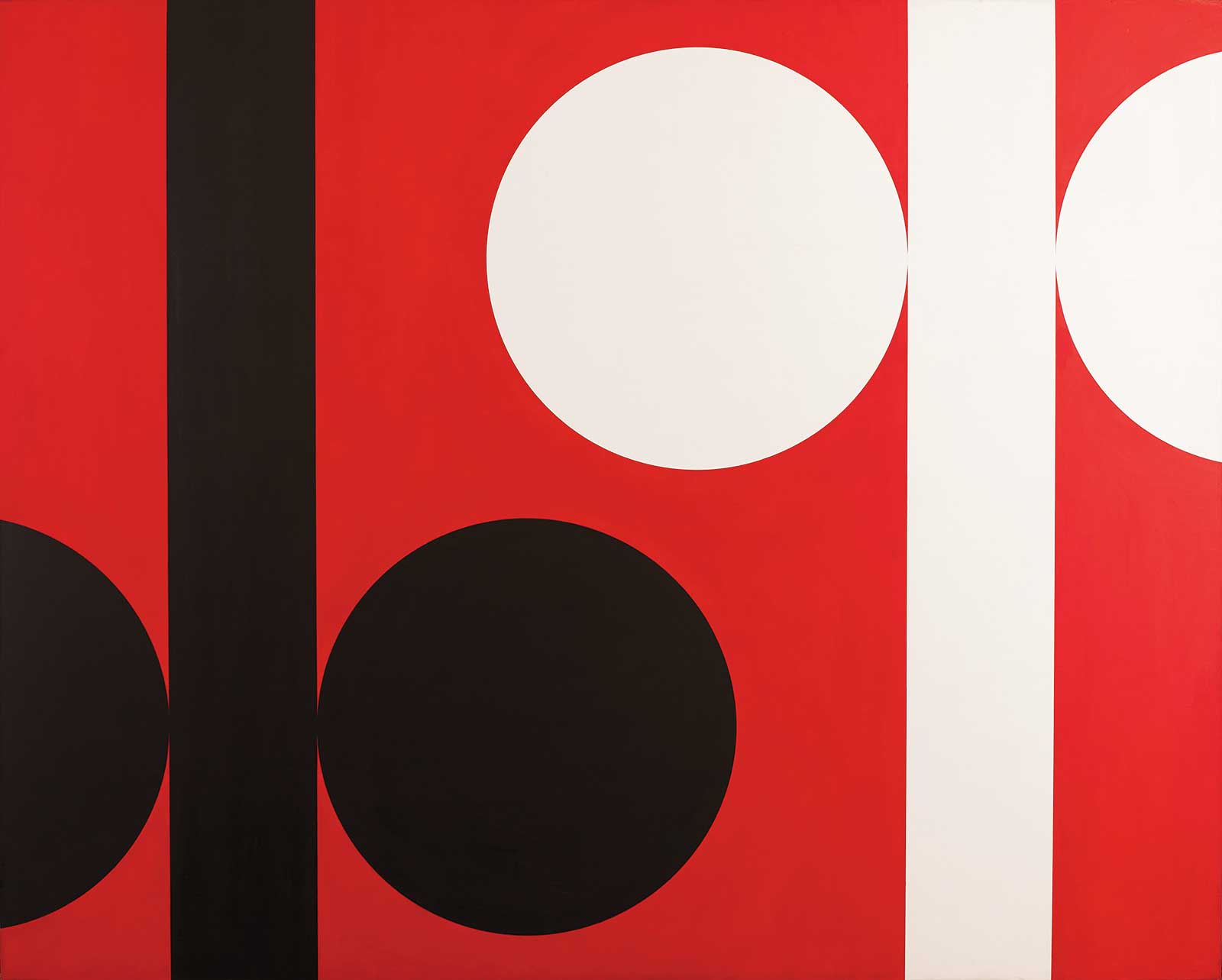
Alexander Liberman (1912-1999), Omega XII, 1961. Acrylic on canvas, 80 x 100 in. in., signed and dated verso
Allner began his studies at the Bauhaus in 1927 under Josef Albers, Wassily Kandinsky, Paul Klee and László Moholy-Nagy. After graduating, he established the design firm Omnium Graphique in Paris (1934-1936), during which time he also exhibited his abstract fine art at the Salon des Surindépendants and the Salon des Réalités Nouvelles. He later served as art director for the publishing house Formes: Éditions d’Art Graphique et Photographique, collaborating with Man Ray. From 1945 to 1948, Allner returned to editorial design as editor of the Swiss journal Graphis, and in 1948 founded the International Poster Annual, cementing his reputation as a leading authority on poster history.
After immigrating to the United States in 1949, Allner worked as a freelance design consultant for RCA, Johnson & Johnson, the American Cancer Society, ITT and IBM. In 1951, he joined Fortune magazine, initially assisting Leo Lionni in a major redesign before serving as art director from 1961 to 1974. During his tenure, he created 79 covers ranging from bold, poster-like abstractions to complex photographic collages. In 1989, the Bauhaus Dessau Foundation mounted a retrospective of his work.
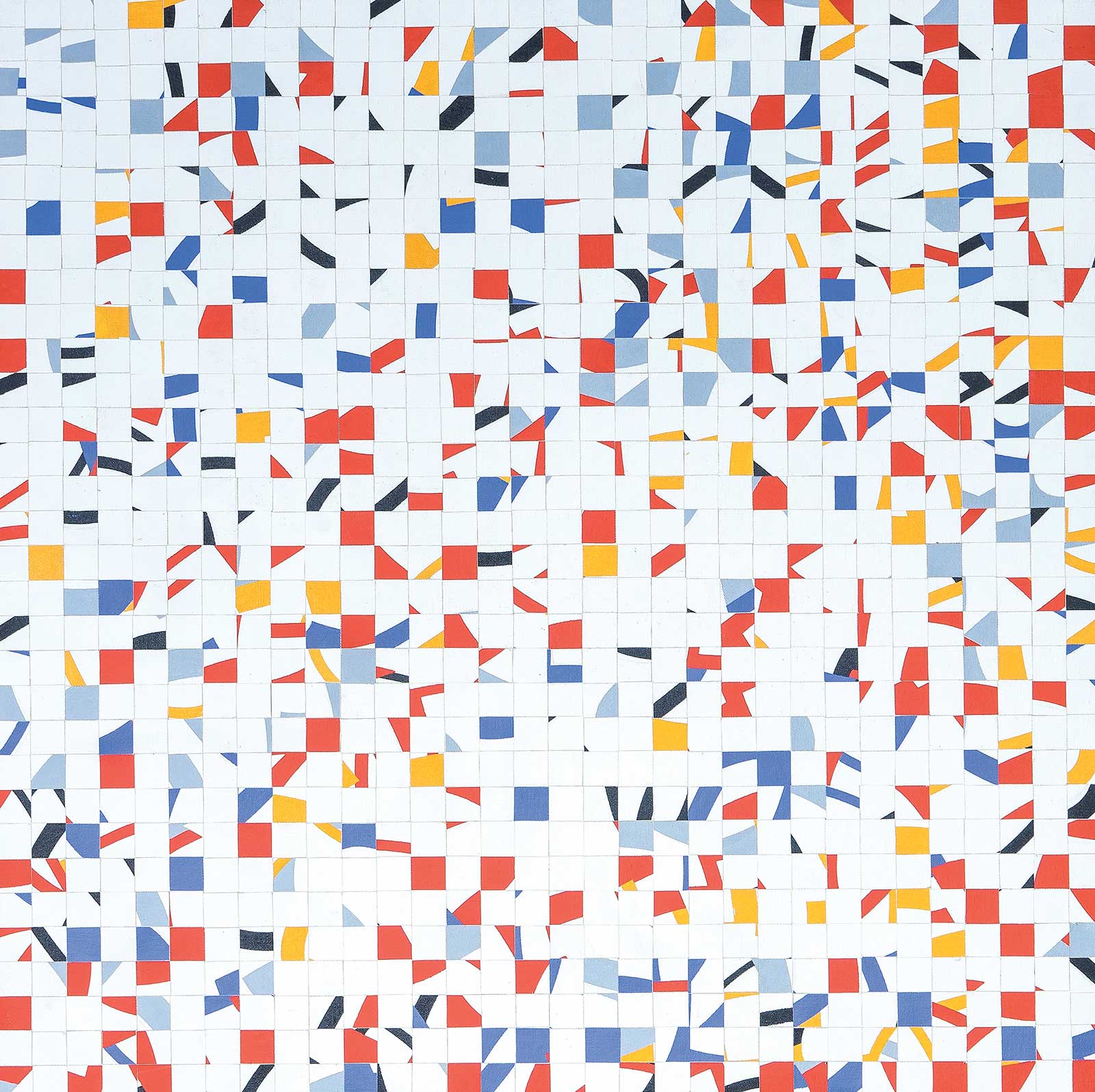
Fred Troller (1930-2002), Untitled, 1970s. Acrylic on canvas, 36 x 36 in., signed verso.
Liberman stands among the most influential art directors of the 20th century, while also achieving prominence as an editor, painter, sculptor and publisher. He began his career at the Parisian magazine Vu in 1933, where he rose from art director to managing editor, and helped redefine photojournalism and establish a modern visual language for print media.
In 1941, Liberman joined Condé Nast as art director of Vogue, a position he held for two decades. In 1962, he was appointed editorial director of all Condé Nast publications, a role he maintained until 1994, shaping the visual identity of one of the most influential publishing houses in the world. Parallel to his editorial career, Liberman developed a prolific body of personal work beginning in the mid-1940s, encompassing painting and large-scale metal sculpture. His work was represented by the Betty Parsons Gallery in the 1950s and, from the early 1960s onward, by the André Emmerich Gallery.
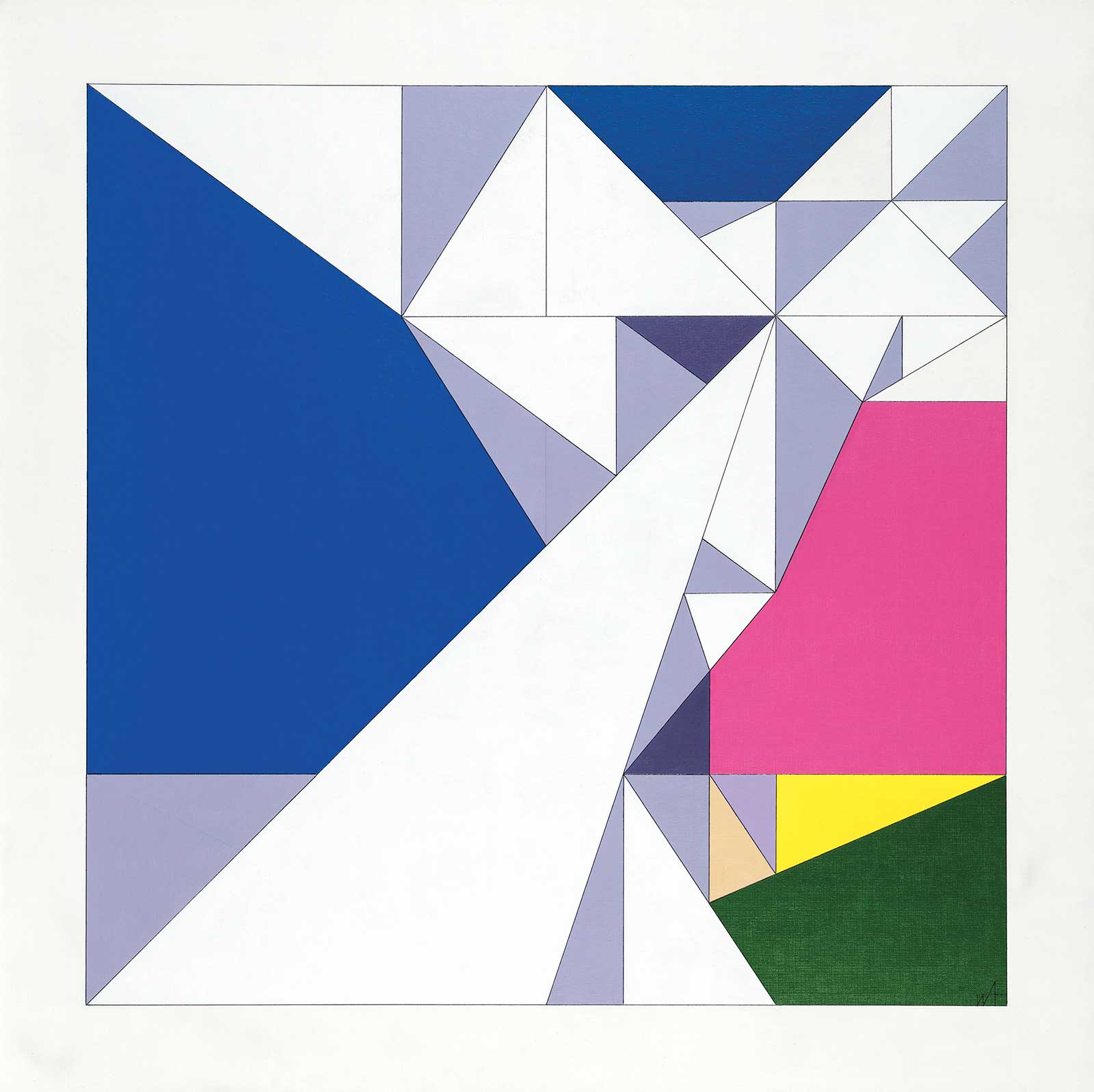
Walter Allner (1909-2006), Untitled (#76), c. 1960-70. Acrylic on board, 48 x 48 in. Signed lower right, estate stamped verso.
Troller, born in Zurich, Switzerland, in 1930, was a pioneering designer who introduced the minimalist principles of Swiss New Typography to the United States around 1960. Rooted in Bauhaus ideals, this approach emphasized clarity, structure, bold typefaces and a disciplined use of color. Troller’s personal work expanded on these principles through dynamic geometric compositions and striking juxtapositions of scale and form.
Troller graduated from the Zurich School of Design in 1951 at the age of 20 and trained with painter and set designer Fritz Butz. Early in his career, he exhibited at the Helmhaus in Zurich and worked with filmmaker Louis de Rochemont on Cinerama Holiday, in which he and his wife Beatrice appeared as featured subjects. Following this period, he relocated to New York to serve as design director for the Swiss Geigy Chemical Corporation, where he oversaw both architectural and graphic design initiatives until 1968. He subsequently founded Troller Associates, developing corporate design programs for major clients including Exxon, General Electric, IBM and Westinghouse.
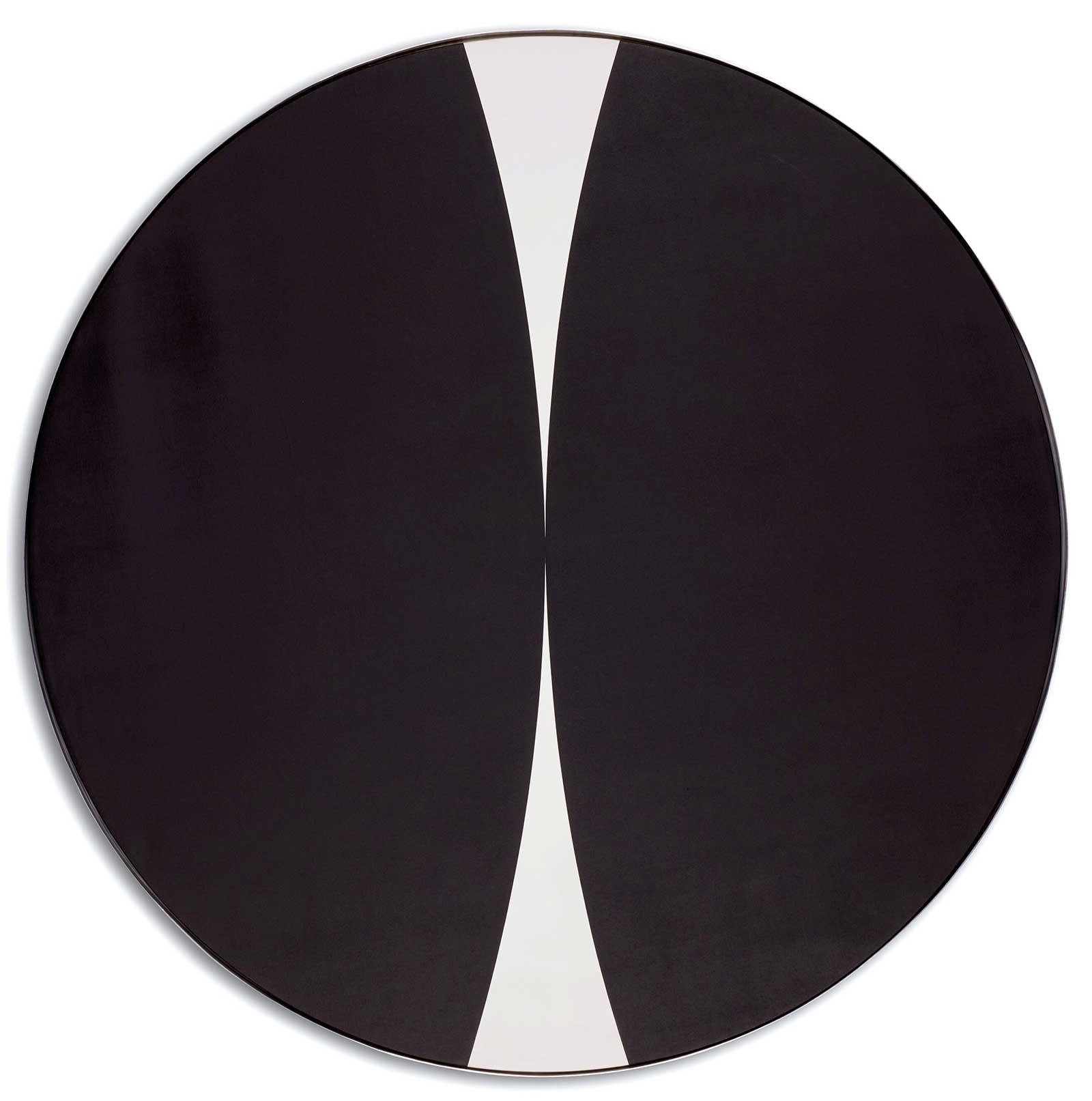
Alexander Liberman (1912-1999), Omicron II, 1961-69. Oil on canvas, 79 in., signed verso.
In the 1960s and early 1970s, Troller was represented by the Grace Borgenicht Gallery in New York who staged several one-man exhibitions of his work. Troller was also a dedicated teacher whose legacy was honored by Georgia State University in 1995 with the exhibition Troller Retrospective: 30 Years of Graphic Design.
“Viewed together, the personal work of these three artists reveals a rich and often overlooked dimension of mid-century design,” says Vallarino. “Their contributions to commercial graphics in the United States were profound, but it is in their independent practice that the enduring spirit of the Bauhaus is most fully realized—continuing to shape the visual language of modern design today.”
Print copies of the catalog are available upon request and a digital version will be accessible on the gallery website. Visit www.vallarinofineart.com for details. —
Powered by Froala Editor